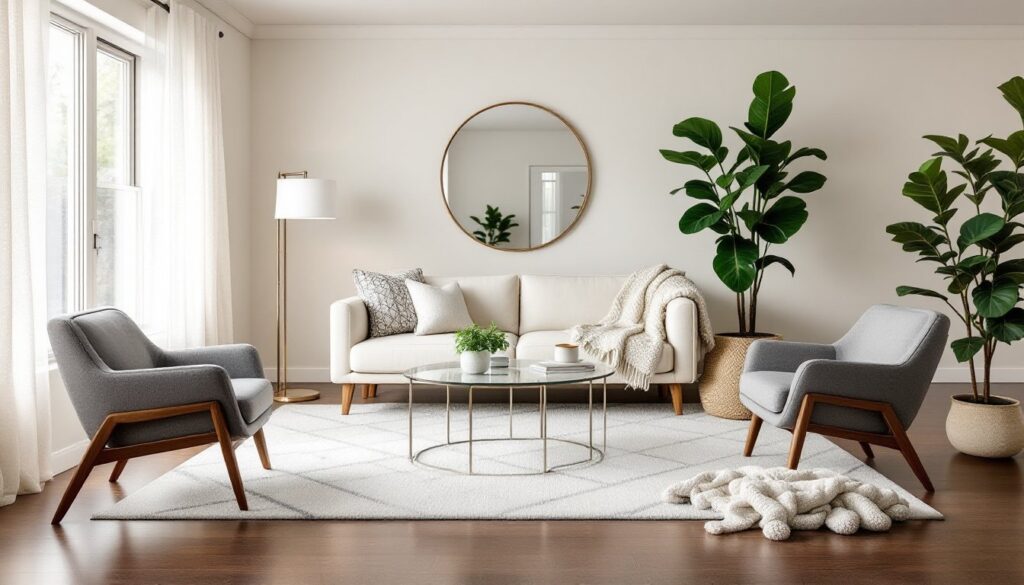
Dark wood floors in a small living room might sound like a design gamble, but they’re actually one of the smartest choices you can make. The rich, grounded tones add warmth and character that light floors sometimes lack. The trick isn’t avoiding dark flooring in tight spaces, it’s learning how to work with it. This article walks through proven strategies for color choices, furniture arrangement, lighting, and accessories that’ll make a small living room with dark wood floors feel open, inviting, and intentional. No fluff, just practical design moves that work.
Table of Contents
ToggleKey Takeaways
- Dark wood floors in a small living room create visual grounding and anchor the space when paired with the right design elements, making them an asset rather than a liability.
- Pair dark wood floors with light, neutral wall colors (whites, soft grays, warm creams) and avoid dark accent walls to prevent the room from feeling closed-in and cramped.
- Float furniture away from walls and choose pieces with exposed legs to create depth and maintain sightlines to your dark floors, preventing the space from feeling constrained.
- Layer your lighting with ambient, task, and accent fixtures using warm white bulbs (2700-3000K) to prevent dark wood from appearing dingy and to make the room feel more expansive.
- Select large area rugs (8′ × 10′ or 7′ × 9′) in light or medium tones to define zones and provide visual relief from dark flooring while unifying the seating area.
- Incorporate varied textures and minimal, purposeful accessories to add warmth and prevent visual clutter in small living rooms with dark wood floors.
Why Dark Wood Floors Work Beautifully in Small Living Rooms
Dark wood floors, think walnut, espresso-stained oak, or natural Brazilian cherry, create visual weight that anchors a room. In small spaces, this grounding effect prevents the room from feeling untethered or chaotic.
Unlike light floors that show every scuff and dust particle, dark hardwood hides minor wear better between cleanings. They’re practical for high-traffic areas where homeowners can’t vacuum three times a day. The contrast they provide also makes lighter furniture and decor pop, creating depth that monochromatic light-on-light schemes often miss.
There’s a common misconception that dark surfaces make rooms feel smaller. That’s only true when the rest of the design fights against them. When you balance dark floors with deliberate color, lighting, and layout choices, they actually define the space rather than shrink it. Many small space design enthusiasts have proven that rich wood tones work in compact rooms when paired with the right elements.
The key is treating your dark floors as the foundation, the constant, and building everything else to complement rather than compete.
Choosing the Right Color Palette to Complement Dark Floors
Color choice matters more with dark floors than almost any other design decision. Get it wrong, and the room feels cave-like. Get it right, and you’ve got a sophisticated space that feels larger than its footprint.
Light and Neutral Wall Colors
White, off-white, and soft grays are the workhorses here. They reflect natural and artificial light, creating the contrast your dark floors need. Benjamin Moore’s Simply White (OC-117) or Sherwin-Williams’ Agreeable Gray (SW 7029) are go-to choices for a reason, they’re neutral enough to work with various wood tones without reading sterile.
Avoid stark white if your wood has warm undertones (reds, oranges in cherry or mahogany). It creates too much contrast and can make the floor look muddy. Instead, choose warm whites with cream or beige bases, something like Benjamin Moore’s Swiss Coffee (OC-45).
For walls, one gallon of quality paint typically covers 350-400 square feet with one coat. A small living room (10′ × 12′ with 8′ ceilings) needs roughly 2 gallons for two coats, accounting for doors and windows.
Accent walls can work, but use them sparingly. A single wall in soft sage, muted navy, or warm taupe adds personality without overwhelming the space. Keep the other three walls light to maintain brightness. Homeowners tackling paint color selection projects often test samples in different lighting conditions before committing, a smart move that prevents costly repaints.
Avoid dark accent walls in small rooms with dark floors. Stacking visual weight creates a closed-in feeling that’s hard to overcome, even with good lighting.
Strategic Furniture Placement for Maximum Space
Furniture arrangement in small rooms requires intentionality. Pushing everything against the walls, a common instinct, often makes spaces feel smaller by creating a bowling alley effect.
Float your main seating piece (sofa or sectional) a few inches from the wall if possible. This creates depth and makes the room feel less cramped. In a 10′ × 12′ room, even 6-8 inches of space behind a sofa tricks the eye into perceiving more square footage.
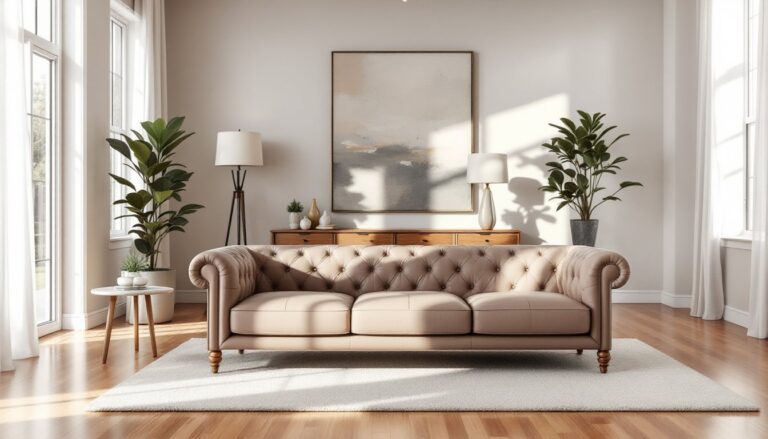
Choose furniture with exposed legs. Sofas, chairs, and tables that sit on visible legs rather than skirted bases allow sight lines to continue to the dark floor underneath. This transparency keeps the room feeling open. Mid-century modern and Scandinavian pieces excel here, tapered wooden legs in lighter finishes contrast nicely with dark floors.
Keep your furniture palette light to medium in tone. Cream, light gray, tan, or even soft blush upholstery provides the visual break your eyes need. If you prefer darker furniture, limit it to one statement piece and balance with lighter accents.
Scale matters. A bulky sectional overwhelms a small room regardless of color. Opt for a standard 3-seat sofa (typically 78-84 inches wide) rather than an L-shaped sectional. Pair it with a streamlined armchair or two small accent chairs instead of a matching loveseat.
Coffee tables should be proportional, aim for roughly two-thirds the length of your sofa and keep them low (16-18 inches high). Glass or acrylic tables disappear visually, preserving sight lines to your dark floors without sacrificing function.
Lighting Solutions That Open Up Your Room
Lighting is non-negotiable in small rooms with dark floors. Inadequate light turns rich wood tones dingy and makes spaces feel claustrophobic.
Layer your lighting. You need three types: ambient (overhead), task (reading lamps), and accent (picture lights, sconces). Relying on one overhead fixture, even a good one, leaves corners dark and the room feeling flat.
For ambient lighting, install a ceiling fixture with multiple bulbs or a flush-mount LED that distributes light evenly. Aim for 50-75 lumens per square foot in living spaces. A 120-square-foot room needs 6,000-9,000 lumens total. That’s roughly 4-6 standard 60-watt-equivalent LED bulbs (800-1000 lumens each) distributed across your lighting layers.
Choose bulbs with a color temperature of 2700-3000K (warm white). Cooler temperatures (4000K+) feel clinical and clash with the warmth of dark wood.
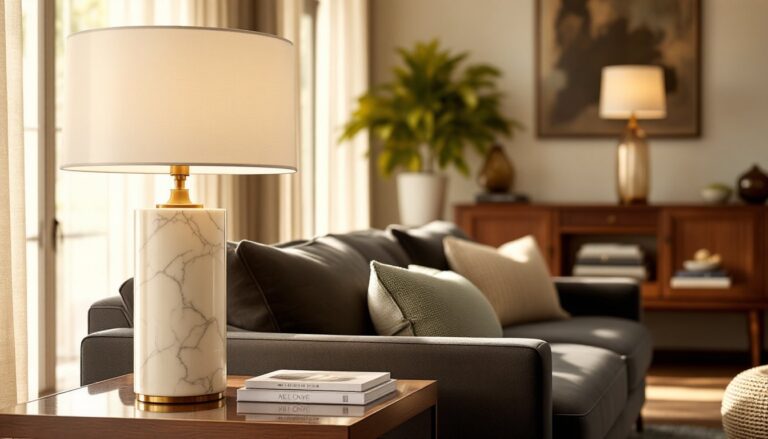
Floor and table lamps add critical task and ambient fill. Place a floor lamp in a dark corner to eliminate shadows. Use table lamps on side tables or consoles to create pools of light at different heights, adding dimension.
Dimmer switches give you control. Install them on overhead fixtures so you can adjust brightness throughout the day. They’re inexpensive ($15-30 for a basic model) and DIY-friendly if you’re comfortable working with electrical boxes. Always shut off power at the breaker before working with switches. If you’re unsure about electrical work, hire a licensed electrician, it’s not worth the risk.
Mirrors multiply light. Position a large mirror opposite a window to bounce natural light deeper into the room. Even in rooms without great natural light, mirrors reflect lamp light and make spaces feel more expansive. Those pursuing DIY mirror frame projects can customize sizes to fit their specific wall dimensions and style preferences.
Rugs, Textures, and Accessories That Balance Dark Flooring
Rugs serve double duty in small living rooms with dark floors: they define zones and provide visual relief from all that rich wood.
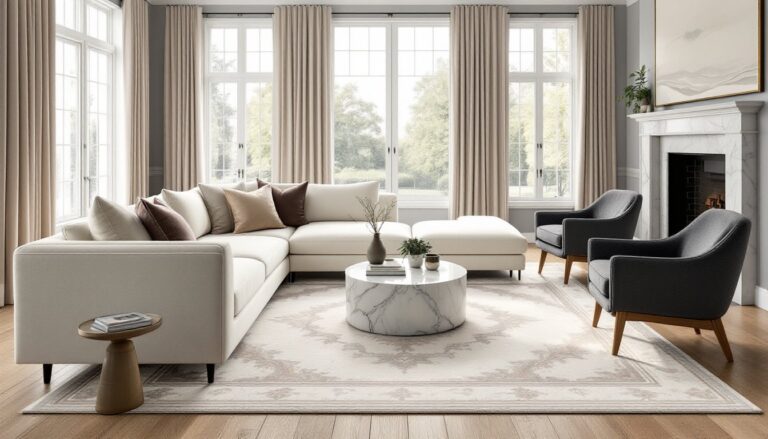
Choose light or medium-toned area rugs. Cream, light gray, soft blue, or warm beige rugs create contrast without fighting your floors. The rug should be large enough that at least the front legs of your seating furniture rest on it, this unifies the seating area. For a typical small living room, an 8′ × 10′ or 7′ × 9′ rug works well.
Avoid tiny rugs (5′ × 7′ or smaller) that float in the middle of the room. They chop up the space and make it feel more cramped. If budget is tight, it’s better to save for the right size than settle for a small rug that works against you.
Pattern can work, but keep it subtle. Geometric patterns in two or three colors add interest without overwhelming. High-contrast patterns (black and white, for example) can be jarring against dark floors, stick with softer variations.
Texture adds warmth without color. Incorporate different materials: a chunky knit throw blanket, linen curtains, velvet pillows, a jute or sisal rug. These tactile variations create interest and prevent the room from feeling flat or one-dimensional.
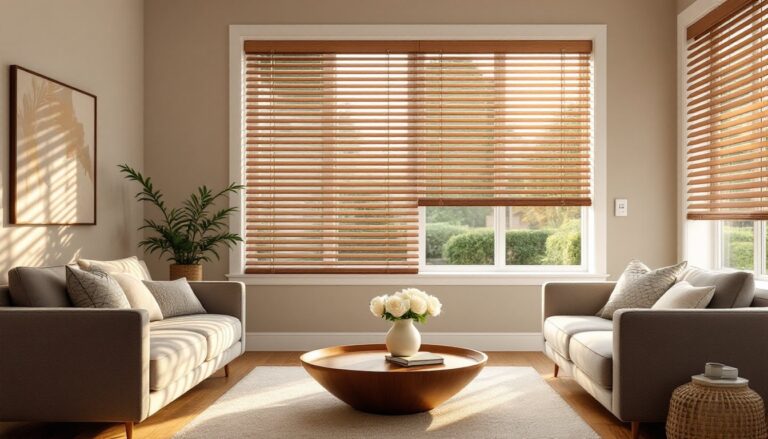
When choosing window treatments, go light and airy. Sheer white or cream curtains filter natural light without blocking it. Hang curtain rods close to the ceiling and let panels extend to the floor, this vertical line draws the eye up and makes ceilings feel higher.
Accessories should be purposeful, not cluttered. A few well-chosen items, a table lamp with a sculptural base, a large potted plant (snake plants and fiddle-leaf figs tolerate indoor conditions well), or a piece of framed art, add personality. Keep surfaces mostly clear. Clutter reads as visual noise in small spaces and works against the openness you’re trying to create.
Conclusion
Dark wood floors in small living rooms aren’t a liability, they’re an asset when you design around them intentionally. Prioritize light walls, smart furniture placement, layered lighting, and balanced accessories. The result is a space that feels grounded, sophisticated, and surprisingly open. Trust the process, take your time with color samples and furniture selection, and don’t be afraid to let those dark floors do what they do best: anchor your entire design.