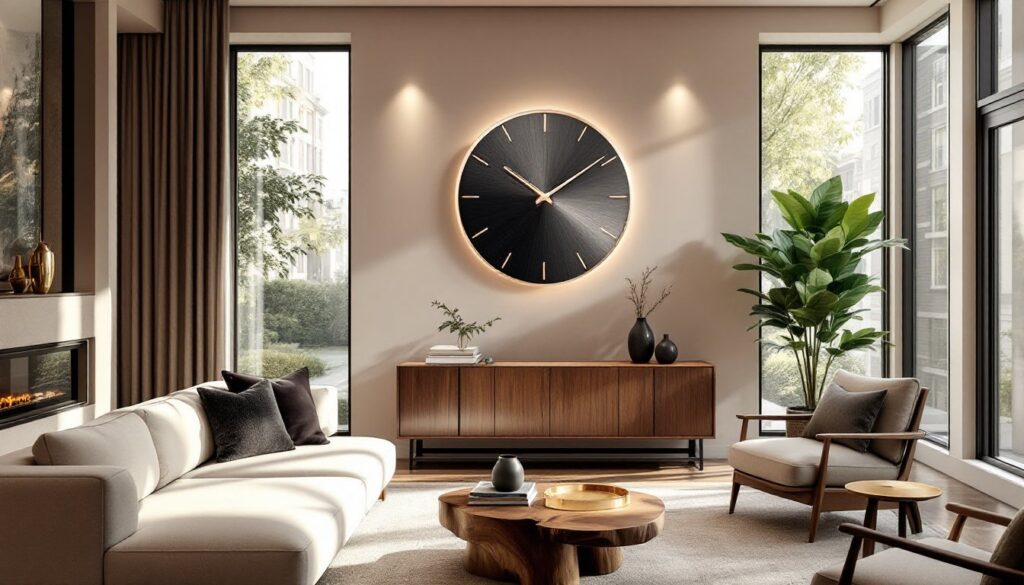
A luxury wall clock does more than tell time, it anchors a room, commands attention, and reflects the homeowner’s attention to detail. In living rooms where furniture, lighting, and artwork compete for visual dominance, the right clock can tie everything together or stand alone as a functional sculpture. Unlike mass-market options, luxury timepieces combine precision engineering with premium materials and design innovation. This guide walks through what sets luxury clocks apart, how to choose the right style and size, and the practical steps to install one properly without damaging walls or undermining the aesthetic you’re building.
Table of Contents
ToggleKey Takeaways
- A luxury wall clock for living room serves as a functional statement piece that combines precision engineering, premium materials, and design that no mass-market option can match, while providing instant time reference without screens or distractions.
- Choose a clock diameter between 24–36 inches for standard 10–12 foot living room walls, and mount the center at eye level (57–60 inches from the floor) to ensure visual balance and maximum impact.
- Premium materials like solid hardwoods with hand-rubbed finishes, brushed stainless steel, brass, bronze, and sapphire crystal separate luxury timepieces from mid-market alternatives and often hold resale value better over time.
- Proper installation requires heavy-duty wall anchors rated for at least 1.5x the clock’s weight for drywall, stud location for pieces over 20 pounds, and consideration of French cleats or D-rings for maximum stability and long-term reliability.
- Vintage-inspired luxury clocks with mechanical movements offer heirloom appeal and can outlast quartz movements by decades with proper servicing, while German quartz modules provide reliable, low-maintenance precision.
Why a Luxury Wall Clock is the Perfect Living Room Statement Piece
Most homeowners default to art or mirrors for focal points, but a well-chosen luxury clock offers something those don’t: movement, function, and a nod to craftsmanship that goes back centuries. High-end clocks from makers like Jaeger-LeCoultre, Hermès, or even contemporary designers blend horology with industrial design, using materials and finishes you won’t find at a big-box store.
The practical advantage is undeniable. Unlike smartphones or smartwatches, a wall clock gives you instant time reference from anywhere in the room, no screens, no distractions. In open-concept living spaces, it can also serve as a visual anchor that delineates zones without adding bulk.
From a design perspective, luxury clocks fill vertical wall space without the commitment of mounting a TV or the fragility of large framed prints. They work in minimalist interiors where every object must justify its presence, and they hold their own in maximalist rooms layered with textiles and collectibles. The key is intentionality: a luxury clock should feel like it belongs, not like an afterthought wedged between a sofa and a bookshelf.
Many high-end models also appreciate or hold value over time, especially limited editions or pieces from heritage brands. This isn’t an investment-grade asset like real estate, but it’s worth noting that quality timepieces often retain resale value better than conventional decor.
Top Styles of Luxury Wall Clocks for Modern Living Rooms
Minimalist and Contemporary Designs
Minimalist luxury clocks strip away ornamentation in favor of proportion, materials, and subtle engineering. Think brushed stainless steel frames, frameless designs with floating hands, or clocks machined from a single piece of aluminum or brass. Brands like Braun and Newgate have popularized this aesthetic, but luxury versions take it further with Swiss or German movements, sapphire crystal faces, and hand-applied finishes.
These work best in living rooms with clean lines, neutral palettes, and a focus on texture over pattern. Pair them with concrete accent walls, linen upholstery, or live-edge wood furniture. The clock becomes a functional sculpture, quiet, precise, and unapologetic.
One popular subtype is the skeleton clock, where the movement is fully visible behind glass. It’s minimalist in form but maximalist in mechanical detail, appealing to anyone who appreciates how things work. Installation is straightforward, but ensure the wall can support the weight: many skeleton clocks use dense materials and weigh 10–15 pounds or more.
Vintage and Antique-Inspired Timepieces
Vintage-inspired luxury clocks lean into nostalgia without sacrificing modern reliability. Expect Roman numerals, ornate hands, distressed metal finishes, and cases made from wood, wrought iron, or aged brass. Some incorporate pendulums or chime mechanisms, adding auditory texture to a room.
These clocks shine in transitional or traditional living rooms with wainscoting, crown molding, or furniture in dark woods like walnut or mahogany. They also complement industrial loft spaces where exposed brick and metal beams create contrast with warmer, older design elements. According to design trends highlighted by Architectural Digest, vintage-inspired pieces are seeing a resurgence as homeowners seek authenticity and longevity over fast furniture.
When shopping, verify whether the movement is quartz or mechanical. Mechanical movements require periodic winding and professional servicing, but they offer a tactile ritual some owners value. Quartz movements are low-maintenance and equally precise, using battery power and electronic oscillation to keep time.
How to Choose the Right Size and Placement for Maximum Impact
Size matters, but not in the way most people assume. A clock that’s too large overwhelms a space: too small, and it disappears. The general rule: the clock diameter should be proportional to the wall area and the distance from which it’ll be viewed. For a living room wall that’s 10–12 feet wide, a 24- to 36-inch diameter clock typically works well. Smaller rooms or accent walls can go down to 18–24 inches.
Measure your wall width and divide by three to get a baseline diameter. Then adjust based on surrounding furniture. If the clock hangs above a sofa or console table, it should be roughly two-thirds the width of the furniture piece below it to maintain visual balance.
Placement height is equally critical. The center of the clock should sit at eye level when standing, roughly 57–60 inches from the floor. In rooms with vaulted ceilings or tall walls, you can go slightly higher, but avoid the temptation to mount it too close to the ceiling, it’ll look marooned.
Consider sightlines. The clock should be visible from primary seating areas without requiring head-turning. In open-concept layouts, think about how it reads from adjacent dining or kitchen zones. And if your living room has multiple focal points, a fireplace, a large window, built-ins, make sure the clock complements rather than competes.
Lighting also plays a role. Natural light can cause glare on glass-faced clocks during certain times of day. If your clock will be backlit by a window, choose a matte finish or position it on a perpendicular wall. For evening visibility, consider nearby sconces or picture lights that can highlight the clock without creating harsh reflections.
Premium Materials That Define Luxury Wall Clocks
Materials separate luxury clocks from their mid-market counterparts. At the entry level of “luxury,” expect solid hardwoods like walnut, teak, or oak with hand-rubbed oil finishes. These bring warmth and grain character that engineered woods or veneers can’t replicate.
Metal clocks in the luxury tier use brushed or polished stainless steel, brass, bronze, or even titanium. Brass and bronze develop patina over time, adding character. Stainless steel stays consistent but can show fingerprints, so factor in maintenance. Some high-end designs incorporate powder-coated aluminum for weight reduction without sacrificing durability.
Glass and crystal components elevate visual depth. Tempered glass protects the face while allowing light to interact with the movement. Some European makers use mineral or sapphire crystal, the same materials found in premium wristwatches, for scratch resistance and optical clarity.
For ultraluxury options, look for clocks with marble, granite, or semi-precious stone inlays. Carrara or Calacatta marble brings classic elegance, while darker stones like soapstone or slate offer moody, modern contrast. These are heavy, often 20+ pounds, and require robust wall anchors.
The clock hands and numerals matter, too. Luxury models often feature hand-applied indices in gold leaf, enamel, or laser-etched metal. Movements range from reliable German quartz modules (accurate to within seconds per month) to Swiss mechanical movements (requiring more care but offering heirloom appeal). If the clock will be a family piece passed down, mechanical movements, even though higher upfront cost and maintenance, can outlast quartz by decades with proper servicing.
Installing Your Luxury Wall Clock: DIY Tips and Best Practices
Before you grab a hammer, check the clock’s weight and mounting hardware. Luxury clocks over 10 pounds need more than a picture hanger. For drywall installation, use heavy-duty wall anchors rated for at least 1.5x the clock’s weight. Toggle bolts or screw-in anchors work well for clocks up to 20 pounds. Beyond that, or for especially valuable pieces, locate a stud using a stud finder and mount directly into framing lumber for maximum hold.
If you’re working with plaster walls, drill pilot holes carefully to avoid cracking. Use plastic anchors designed for plaster, not drywall. For brick or concrete accent walls, you’ll need a masonry bit and sleeve anchors or tapcon screws. Wear safety glasses and a dust mask when drilling masonry, the silica dust is a respiratory hazard.
Most luxury clocks come with a keyhole hanger, D-ring, or French cleat on the back. French cleats offer the most stability for heavy or oversized clocks. If the clock only has a wire hanger, consider upgrading to a cleat or D-ring setup for long-term reliability.
Step-by-step installation:
- Mark the center point on the wall at your desired height (57–60 inches to the clock’s center).
- Measure the clock’s mounting hardware, distance from the top edge to the hanger.
- Transfer that measurement to the wall, marking where the anchor or screw will go.
- Drill pilot holes if using anchors. For studs, a pilot hole prevents splitting.
- Install anchors or screws, leaving about ¼ inch proud of the wall for keyhole hangers.
- Hang the clock and check level with a bubble level or smartphone app.
- Adjust as needed, then tighten screws fully once level is confirmed.
For clocks with visible movements or glass fronts, handle by the frame edges to avoid fingerprints or pressure on delicate components. If the clock uses a pendulum or mechanical movement, ensure it’s plumb, even slight tilts can affect accuracy or cause the mechanism to bind.
Some homeowners prefer to mount a backing board (a painted or stained piece of plywood) to the wall first, then attach the clock to the board. This spreads weight across a larger area and simplifies future adjustments or removal. It also protects the wall finish if you’re renting or plan to move.
Finally, if your clock requires wiring for built-in lighting or smart features, and you’re not comfortable with electrical work, hire a licensed electrician. Many jurisdictions require permits for new electrical runs, and improper wiring is a fire hazard. It’s not worth the risk on a piece that likely cost more than the labor to install it correctly.