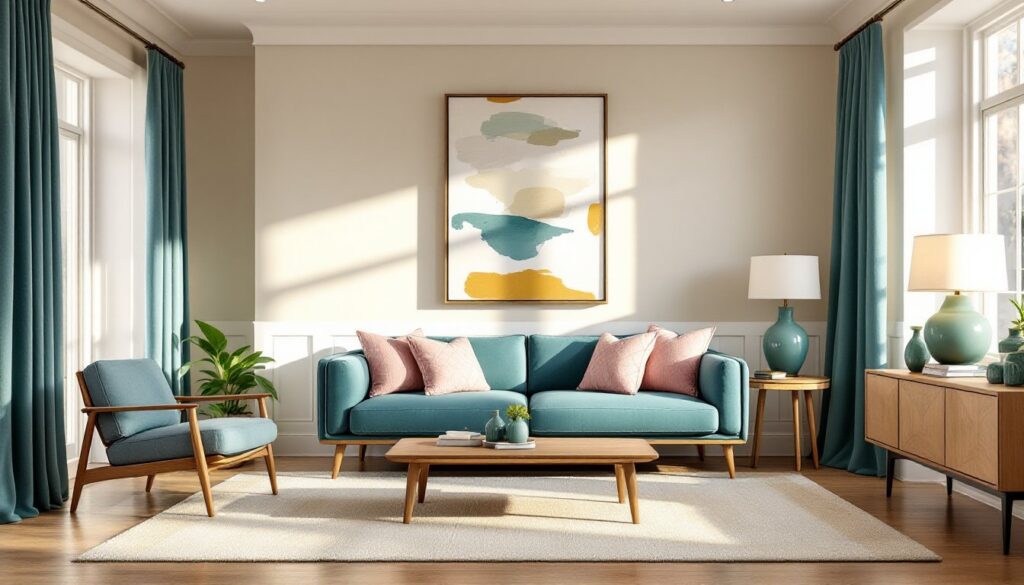
Teal sits at the intersection of calm and confidence, a color that brings depth without overwhelming a space. It’s not a trend that’ll look dated by next season: it’s been working in interiors for decades because it plays well with both warm and cool palettes. Whether you’re painting an accent wall or adding a teal sofa, this color offers enough flexibility to work in modern, traditional, and eclectic living rooms alike. This guide walks through the practical decisions, paint finishes, fabric choices, and pairing strategies, that make teal work in real homes.
Table of Contents
ToggleKey Takeaways
- Teal living room decor works across multiple design styles because it functions as both a statement and neutral color, adapting to different lighting conditions throughout the day while pairing naturally with wood tones and existing furniture.
- Choose teal shades based on room size and light exposure: deep teals suit larger, well-lit spaces; mid-tone teals work in most rooms; and soft, dusty teals prevent muddiness in north-facing or low-light living rooms.
- Paint with satin or eggshell finishes in two coats, start with an accent wall if committing to full teal feels risky, and always test samples on multiple walls before purchasing.
- Invest in performance fabrics for teal sofas and sectionals to resist stains and fading, while accent chairs and ottomans offer lower-commitment ways to add color without overwhelming the space.
- Pair teal with warm neutrals like taupe and cream, or create contrast with navy, mustard yellow, or coral accents—avoid matching wall and furniture shades exactly to prevent the room from flattening visually.
- Use throw pillows, area rugs, curtains, and decorative objects in complementary teal tones to test the color affordably and allow seasonal updates without major furniture investments.
Why Teal Works Beautifully in Living Rooms
Teal functions as both a neutral and a statement color, which makes it unusually versatile. It reads cool in bright light and warm in lamplight, adapting to the room’s conditions throughout the day. That color-shifting quality means it doesn’t flatten out like some single-note blues or greens.
From a design perspective, teal anchors a room without demanding constant attention. It pairs naturally with wood tones, walnut, oak, and even lighter birch, because of its blue-green balance. If your living room has existing wood trim, flooring, or furniture, teal won’t fight it.
Teal also hides minor imperfections better than stark whites or pale grays. Scuffs, shadows, and wall texture become less obvious, which is practical in high-traffic living spaces. It’s forgiving in homes with kids, pets, or renters who can’t repaint every couple of years.
The color has staying power. Unlike millennial pink or 2010s chevron, teal has appeared consistently in interior design trends across multiple decades. It doesn’t scream a particular era, so it ages well.
Choosing the Right Shade of Teal for Your Space
Not all teals are the same, and picking the wrong one can make a room feel cramped or cold. Test paint samples on at least two walls, one that gets direct sunlight and one that doesn’t. Colors shift dramatically based on exposure.
Deep teals (those with more blue saturation) work well in larger living rooms with high ceilings and plenty of natural light. They create drama but need space to breathe. In smaller rooms, deep teal can close in the walls unless you’re balancing it with light-colored furniture and reflective surfaces like mirrors or glass.
Mid-tone teals hit the sweet spot for most living rooms. They’re saturated enough to feel intentional but not so dark that they shrink the space. These shades pair easily with both light and dark furniture, giving you more flexibility as your style evolves.
Soft or dusty teals lean toward gray-green and work in rooms with limited natural light. They won’t turn muddy in dim conditions the way some greens do. These are solid choices for north-facing living rooms or homes with smaller windows.
Consider your existing finishes. If you have cool-toned flooring (gray laminate, cool-toned tile), lean toward blue-heavy teals. Warm floors like oak or cherry pair better with green-leaning teals. Test samples next to your baseboards and against your flooring before committing to a gallon.
Teal Wall Treatments and Paint Ideas
Paint is the most straightforward approach. One gallon of quality interior paint typically covers 350–400 square feet with one coat, but plan on two coats for even saturation, especially with darker teals. Use a satin or eggshell finish for living room walls, flat finishes show scuffs, and high-gloss can feel too busy on large surfaces.
If you’re hesitant to commit to four teal walls, start with an accent wall. The wall behind your sofa or the one opposite the main entry point works well. Prep the surface properly: fill nail holes with spackle, sand smooth, and prime if you’re covering a dark color or fresh drywall. Skipping primer leads to uneven color and wasted paint.
Wallpaper gives you pattern options that paint can’t. Teal grasscloth adds texture without busy patterns, and it hides minor wall imperfections better than smooth paper. Peel-and-stick options work for renters, but they don’t hold up as well on textured drywall. If your walls have an orange-peel texture, traditional paste-on wallpaper adheres better.
Board-and-batten or wainscoting painted in teal creates architectural interest, especially in living rooms with low ceilings or minimal trim. Install the boards at one-third wall height, paint them teal, and keep the upper two-thirds a lighter neutral. This draws the eye horizontally and makes the room feel wider.
Shiplap or tongue-and-groove paneling in teal works in modern farmhouse or coastal styles. Use 1×6 or 1×8 pine boards with a nickel-gap spacing for a clean look. Paint before installation to avoid visible seams. This is more involved than paint but adds resale value if executed cleanly.
Furniture and Upholstery in Teal Tones
A teal sofa becomes the focal point, so it needs to be durable. Look for performance fabrics like Crypton or Sunbrella, which resist stains and hold color longer than standard upholstery. Velvet teal sofas look rich but show wear quickly in homes with pets or kids, save velvet for accent chairs that get less use.
If a full teal sofa feels like too much commitment, try a teal sectional with modular pieces. You can rearrange sections or swap out individual pieces as your layout changes. Avoid teal leather unless it’s high-quality top-grain: bonded leather in bold colors cracks and peels within a few years.
Accent chairs in teal work in nearly any living room. A single wingback or mid-century modern chair in teal adds color without overpowering neutral sofas. Pair teal chairs with wood or metal legs rather than fully upholstered bases, it keeps the look grounded.
Ottomans and benches in teal offer flexible seating and a pop of color. A teal storage ottoman doubles as a coffee table and hides clutter, which is practical in smaller living rooms. Choose one with a removable top so you can access storage without awkward lifting.
When mixing teal furniture with teal walls, vary the shade or texture. A mid-tone teal wall with a deep teal sofa creates depth. Same-shade teal on walls and furniture can flatten the room and make pieces blend into the background. If you’re committed to matching shades, break them up with contrasting throw pillows, rugs, or side tables.
Accent Pieces and Accessories to Complete the Look
Throw pillows are the easiest and cheapest way to test teal. Use a mix of solid teal and patterned pillows that incorporate teal with other colors. A 60/40 split, 60% solid or subtle texture, 40% bold pattern, keeps the look balanced. Swap pillow covers seasonally if you want to shift the mood without buying new furniture.
Area rugs with teal accents anchor the seating area and tie the room together. If your walls or sofa are teal, choose a rug with teal as a secondary color rather than the dominant one. A 9×12 rug works in most living rooms: make sure the front legs of your sofa and chairs sit on the rug to define the space.
Curtains in teal add height and soften hard edges. Hang curtain rods 4–6 inches above the window frame and extend them 3–6 inches beyond each side of the window to make windows look larger. Choose lined curtains to control light and improve insulation, unlined teal curtains can look washed out in bright sun.
Artwork and wall decor provide teal accents without permanence. Abstract art with teal elements works in modern spaces, while teal-matted photos or prints suit traditional rooms. Avoid matching your teal decor too precisely, slight shade variations look more collected than color-matched.
Lighting fixtures in teal, like ceramic table lamps or pendant shades, add unexpected color at eye level. A teal lamp base with a neutral shade keeps the look subtle. Teal glass pendant lights work over side tables or in corners that need a focal point.
Decorative objects like vases, bowls, and trays in teal finish the space. Group them in odd numbers (three or five) for a more intentional look. Teal ceramics or glass catch light and add depth on shelves and mantels.
Color Combinations That Complement Teal
Teal pairs naturally with warm neutrals, taupe, cream, warm gray, and tan. These colors let teal stand out without competing. In popular teal living room designs, warm neutrals often ground the space and prevent it from feeling too cool.
White and teal create a crisp, coastal look. Use bright white trim and ceilings with teal walls or furniture. This combination works well in rooms with good natural light but can feel sterile in darker spaces, add wood tones or brass accents to warm it up.
Navy and teal create a layered, sophisticated palette. Use navy as the deeper anchor color and teal as the brighter accent. This works especially well with brass or gold hardware and fixtures.
Mustard yellow or gold provides contrast that makes teal pop. Use yellow in small doses, throw pillows, artwork, or a single accent chair. Too much yellow can overwhelm the space, so stick to a 70/30 split favoring teal.
Coral or blush pink softens teal and adds warmth. This combination feels modern without being overly trendy. Use coral in textiles like pillows, throws, or a patterned rug. Many contemporary teal living rooms incorporate warm pink or coral accents for balance.
Gray and teal work in modern or industrial spaces. Choose warm grays (those with beige or brown undertones) rather than cool grays, which can make teal look icy. Charcoal gray grounds teal and adds visual weight.
Wood tones, especially walnut, oak, and teak, pair well with teal. The warmth in natural wood prevents teal from feeling cold. Mix wood finishes rather than matching everything: varied wood tones look more organic and less staged.
Conclusion
Teal offers enough range to work in nearly any living room style, from modern minimalist to traditional. Start with one element, paint, a sofa, or accent pieces, and build from there. The color’s flexibility means you can adjust the intensity and pairings as your space evolves. Keep your choices grounded in practical considerations, light exposure, existing finishes, and how much maintenance you’re willing to do, and teal will deliver.