
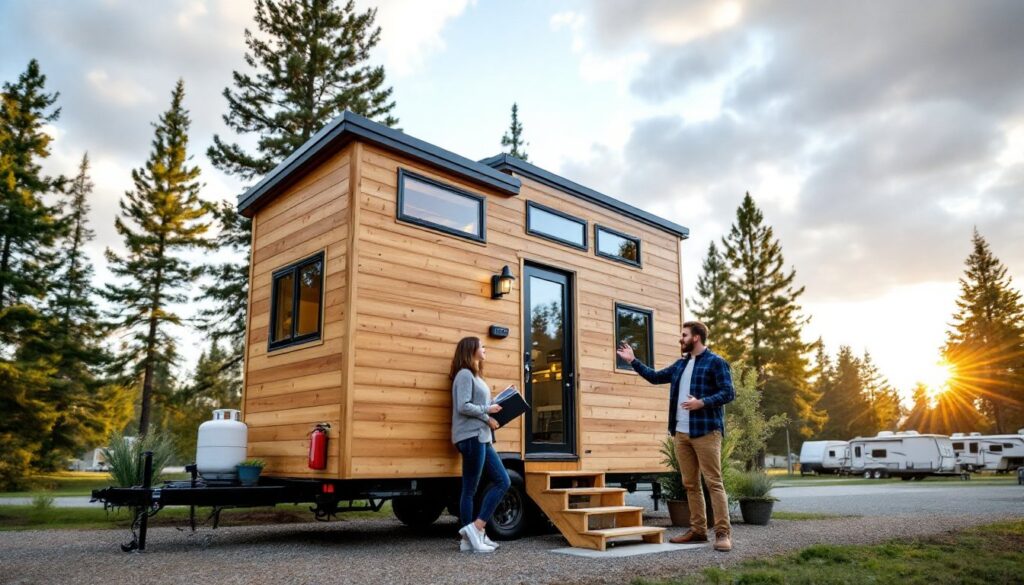
Downsizing to a tiny home doesn’t mean you can skip insurance, but it does mean the rules change. Traditional homeowners insurance won’t cover most tiny houses, whether they’re parked on a trailer or anchored to a foundation. The good news? Specialized coverage exists, and understanding your options can save you thousands in the long run. This guide walks through what tiny home insurance actually covers, what it costs, and how to avoid the coverage gaps that leave many owners exposed when disaster strikes.
Table of Contents
ToggleKey Takeaways
- Tiny home insurance is essential because standard homeowners policies typically don’t cover dwellings under 400 square feet, leaving owners vulnerable to financial loss from fire, theft, and liability claims.
- Mobile tiny homes on wheels generally cost $500–$800 annually for insurance, while stationary homes on permanent foundations may cost $400–$1,000 per year, with rates varying based on location, construction quality, and coverage limits.
- Common coverage gaps like flood damage, earthquake protection, off-grid system failures, and transit damage require separate policies or specialty endorsements to avoid costly uninsured losses.
- When shopping for tiny home insurance, work with specialty providers who understand tiny home valuations, get at least three quotes, and verify whether coverage includes the trailer frame and protection during moves.
- Underinsuring your tiny home by even 20% can trigger coinsurance penalties that dramatically reduce claim payouts, so calculate your $150–$250 per square foot replacement cost to set appropriate dwelling coverage limits.
- Document your tiny home’s construction with builder certification, photos, and utility connection details, then review your policy annually to ensure coverage keeps pace with upgrades, location changes, and personal property additions.
What Is Tiny Home Insurance and Why You Need It
Tiny home insurance is specialized coverage designed for dwellings under 400 square feet, structures that fall outside the scope of standard homeowners policies. Most conventional insurers won’t touch a tiny house because it doesn’t meet minimum square footage requirements, typically 800–1,000 square feet depending on the carrier.
Insuring a tiny house protects against the same perils as traditional home coverage: fire, wind, hail, theft, and liability claims. But the policy structure differs based on whether your home is mobile or permanent. A tiny house on wheels operates more like an RV in the eyes of insurers, while a foundation-built tiny home may qualify for modified home insurance basics with adjusted minimums.
Skipping coverage is a gamble most can’t afford. A basic 200-square-foot tiny home can cost $30,000–$80,000 to build or buy. One kitchen fire, one fallen tree, or one break-in could wipe out that investment. Without insurance, you’re also personally liable if someone gets injured on your property, a risk that extends to guests, contractors, and even trespassers in some jurisdictions.
Most lenders require proof of insurance before approving a tiny home loan. If you’re parking on leased land or in an RV community, the landowner may also mandate coverage as a condition of your rental agreement.
Types of Insurance Coverage for Tiny Homes
Tiny home insurance isn’t one-size-fits-all. Your coverage type depends on how and where you live.
Standard coverage options include:
- Dwelling coverage: Pays to repair or rebuild the structure after a covered loss. Insurers calculate this based on replacement cost, not market value.
- Personal property coverage: Covers belongings inside the home, furniture, electronics, clothing. Most policies cap this at 50–70% of your dwelling coverage.
- Liability protection: Covers legal fees and damages if someone is injured on your property. Standard limits start at $100,000, but $300,000–$500,000 is smarter for most owners.
- Additional living expenses (ALE): Pays for temporary housing if your tiny home becomes uninhabitable. This is crucial if your home is your primary residence.
Some carriers offer specialty endorsements like equipment breakdown coverage for solar panels or composting toilets, and inflation guard to adjust your dwelling limit as construction costs rise.
Mobile Tiny Homes vs. Stationary Tiny Homes
The biggest coverage split comes down to wheels versus foundation.
Insurance for tiny house on wheels typically falls under RV or specialty mobile home policies. These cover the structure while parked and often while in transit, though some insurers exclude collision damage during moves. You’ll need to verify whether your policy covers the trailer itself, many don’t, requiring separate trailer insurance.
Key considerations for mobile tiny homes:
- Certified builders matter: Homes built to RVIA or NOAH standards are easier to insure and may qualify for better rates.
- Transit coverage: Most policies require professional towing. DIY moves often void coverage.
- Storage location: Parking in a commercial RV park usually costs less to insure than parking on raw land without utilities.
Stationary tiny homes anchored to permanent foundations may qualify for modified homeowners insurance, assuming they meet local building codes. In many jurisdictions, that means:
- Permanent frost-protected foundation or concrete slab
- Connection to municipal utilities or approved off-grid systems
- Compliance with IRC Appendix Q (International Residential Code for tiny houses)
- Proper anchoring and tie-downs to resist wind loads
Stationary homes built without permits or on non-conforming foundations often get pushed into RV policies regardless of whether they have wheels, which can create coverage gaps around liability and personal property.
How Much Does Tiny Home Insurance Cost?
Tiny home insurance cost varies widely based on home type, location, and coverage limits. Expect to pay anywhere from $300 to $1,200 annually for basic coverage.
Mobile tiny homes (on wheels) typically run $500–$800 per year for a policy covering:
- $50,000 dwelling coverage
- $25,000 personal property
- $100,000 liability
- $5,000 ALE
Stationary tiny homes on permanent foundations often cost $400–$1,000 annually, sometimes less if they qualify for traditional homeowners policies with adjusted minimums.
Factors that drive up premiums:
- Location: High-risk wildfire or hurricane zones can double rates. Parking in a certified RV park with fire suppression may lower costs.
- Age and construction: DIY builds or homes over 10 years old face higher rates. Certified builders and new construction get preferred pricing.
- Claims history: Previous claims, even on a different property, can increase rates by 15–30%.
- Deductibles: Choosing a $2,500 deductible instead of $500 can cut premiums by 20–25%.
- Security features: Monitored alarm systems, deadbolts, and fire extinguishers may earn discounts of 5–15%.
To estimate your specific replacement cost, calculate $150–$250 per square foot for materials and labor in most regions. A 300-square-foot tiny home could cost $45,000–$75,000 to rebuild after a total loss, which should guide your dwelling coverage limit.
Don’t skimp on coverage to save $10/month. Underinsuring by even 20% can trigger coinsurance penalties, meaning the insurer only pays a fraction of a claim, even for partial losses.
Finding the Right Insurance Provider for Your Tiny Home
Not all carriers insure tiny homes, and the ones that do often have strict eligibility rules.
Start with specialty insurers that focus on tiny homes, RVs, or mobile dwellings:
- Strategic Insurance Agency offers policies specifically for RVIA-certified and custom tiny homes.
- Policygenius and Openly can quote modified homeowners policies for foundation-built tiny homes in eligible states.
- Progressive and Nationwide write RV policies that cover some tiny houses on wheels, though coverage varies by underwriter.
Before shopping, gather:
- Proof of construction: Builder certification, photos, or receipts showing materials and labor.
- Title or registration: For mobile homes, RVIA certification or DMV registration proves ownership and value.
- Foundation details: For stationary homes, photos of the foundation and any engineering reports.
- Utility connections: Documentation of electric, water, and sewer hookups (or approved off-grid systems).
Questions to ask every carrier:
- Does the policy cover the home while stationary and in transit?
- Is the trailer frame included in dwelling coverage, or does it need separate insurance?
- Are custom-built or DIY homes eligible, or only certified builds?
- What perils are excluded? (Flood and earthquake typically require separate policies.)
- Does personal property coverage include built-in furniture and appliances?
Get at least three quotes and compare not just price, but coverage limits and exclusions. A $600/year policy with $10,000 personal property caps may cost you more in the long run than an $800/year policy with $30,000 in contents coverage.
If you’re financing your tiny home, ask your lender for their approved carrier list. Some lenders work with specific insurers that understand tiny home valuations and won’t lowball replacement cost estimates.
Common Coverage Gaps and How to Avoid Them
Even with insurance in place, tiny homeowners face unique vulnerabilities.
Transit damage is the biggest gap for mobile homes. Many RV policies exclude collision or road damage unless the home is being towed by a commercial service. If you’re moving your tiny house yourself, verify whether your policy covers accidents, blown tires, or bridge strikes. Some carriers require professional transport and won’t cover DIY moves at all.
Flood and earthquake damage are excluded from nearly all standard policies. If you’re in a flood zone or seismic area, purchase separate coverage through the National Flood Insurance Program (NFIP) or a private earthquake insurer. A $100,000 flood policy typically costs $400–$700 annually depending on your FEMA flood map zone.
Off-grid system failures often aren’t covered. Solar panels, composting toilets, rainwater collection systems, and propane setups may need separate equipment breakdown or specialty endorsements. Without them, a $15,000 solar array damaged by lightning won’t be covered under basic dwelling protection.
Personal property limits can leave you underinsured. Most tiny home dwellers pack a lot into a small space, high-end appliances, electronics, tools, and custom built-ins. If your policy caps contents at $20,000 but you’ve got $35,000 in belongings, you’ll eat the difference after a theft claim.
Liability on leased land creates gray areas. If you’re renting a lot in an RV park or on private property, confirm whether your liability coverage extends to injuries that occur outside the home but on the leased parcel. Some policies exclude “premises liability” if you don’t own the land.
Deductibles for mobile homes can be higher than stationary homes, sometimes $2,500–$5,000 instead of the typical $1,000. Budget for that before filing small claims, as repeated claims can trigger non-renewal.
To plug these gaps:
- Request a contents inventory worksheet from your insurer and document everything with photos and receipts.
- Add scheduled personal property endorsements for high-value items like tools, instruments, or jewelry.
- Bundle your tiny home policy with auto or umbrella insurance for multi-policy discounts and higher liability limits.
- Review your policy annually, especially if you’ve added solar panels, upgraded appliances, or moved to a new location.
Work with an agent who understands tiny homes, preferably one recommended by your builder or a tiny home community. Generic agents at big-box insurers often misclassify tiny homes, leading to denied claims or underinsurance. Finding knowledgeable home service professionals can make the difference between a smooth claims process and a financial headache.
Conclusion
Tiny home insurance isn’t optional, it’s the safety net that keeps your investment and your lifestyle intact. Whether you’re rolling down the highway or anchored to a foundation, the right coverage protects against the unexpected without very costly. Take the time to compare policies, document your build, and address coverage gaps before you need to file a claim. That’s how you turn a tiny home into a secure, insured homestead.