Curtains do more than block light, they define a room’s character, anchor the design, and elevate everything from furniture to wall color. In a living room, where first impressions matter and comfort meets presentation, luxury curtains become a functional piece of architecture. The difference between standard window treatments and genuine luxury isn’t just about price: it’s about fabric weight, construction quality, hardware, and how the whole package frames your space. Choosing the right curtains means understanding what separates mass-market panels from custom-grade drapery worth the investment.
Table of Contents
ToggleKey Takeaways
- Luxury curtains for living rooms are defined by fabric weight (8-15+ oz/sq yd), quality linings, 2.5-3x fullness ratio, and hand-finished details like weighted hems and French seams that separate them from mass-market panels.
- Premium fabrics such as silk blends, velvet, linen, and wool offer superior drape, durability, and tactile quality—avoid thin polyester and stiff, plasticky materials if you want a high-end look.
- Proper hanging height (2-4 inches below ceiling) and length (kiss the floor, break, or puddle styles) are critical to elevating a room’s proportions and making curtains appear tailored rather than generic.
- Choose solid, saturated colors or tone-on-tone patterns like damasks and jacquards for timeless luxury; bold prints require confidence and should only anchor a room when other elements are minimal.
- Invest in substantial hardware with 1.5-2 inch diameter rods in steel, brass, or wrought iron, strategically placed brackets every 30-36 inches, and consider motorization to protect delicate fabrics and integrate with smart home systems.
- Precise DIY installation requires finding studs, using heavy-duty anchors rated for 30-50 lbs per anchor, checking level carefully, and dressing pleats properly—hire professionals for motorized systems or treatments over $2,000.
What Makes a Curtain ‘Luxury’?
Luxury curtains aren’t defined by a single feature, they’re the sum of material quality, construction, and design precision.
Fabric weight is the first telltale sign. High-end curtains typically use fabrics weighing 8-15 ounces per square yard or more, giving them body, drape, and substantial hang. Cheap panels feel flimsy and crumple awkwardly: luxury fabric falls in clean, sculptural folds.
Lining and interlining separate budget from premium. A quality curtain includes a blackout or thermal lining (often cotton sateen or acrylic-coated fabric) for light control and energy efficiency, plus an optional interlining layer, typically cotton flannel or bump, that adds weight, insulation, and a richer appearance. Triple-layer construction is standard in true custom drapery.
Fullness ratio matters. Luxury curtains use 2.5 to 3 times the fabric width of the window they cover, creating generous pleats and depth. Budget ready-mades often skimp at 1.5x, resulting in flat, skimpy coverage.
Hand-finished details, French seams, weighted hems (small lead or chain sewn into the bottom), covered buttons, and custom trims, add durability and polish. Machine-sewn hems with visible stitching and raw edges inside scream mass production.
Finally, luxury curtains are often custom-sized to your exact ceiling height and window width, ensuring a tailored fit rather than the generic 84-inch or 96-inch standard lengths that rarely suit a room’s proportions.
Best Luxury Curtain Fabrics for Living Rooms
Fabric choice drives both aesthetics and function. Here’s what works for living rooms that need to balance style, durability, and light control.
Silk and silk blends are classic luxury. Pure silk taffeta or dupioni offer sheen and texture, but pure silk fades in direct sun and requires dry cleaning. Opt for silk-linen blends or faux silk (polyester satin weaves) if you want the look with better UV resistance and easier care.
Velvet has surged in popularity, especially cotton-silk velvet or heavyweight polyester velvet. It delivers dramatic color depth, excellent sound absorption, and natural light-blocking properties. Velvet curtains work well in formal living rooms or spaces needing acoustic dampening. Expect fabric weights around 12-16 oz/sq yd.
Linen and linen-cotton blends bring an organic, sophisticated texture. They’re breathable, age beautifully, and suit both modern and traditional interiors. Pure linen wrinkles easily, some designers embrace this as character, but if crisp lines matter, choose a linen-polyester blend with added structure.
Wool and wool blends provide superior insulation and drape. They’re underused in curtains but ideal for living rooms in colder climates or luxury modern homes emphasizing energy efficiency.
Avoid thin polyester, sheer-only panels (unless layered), or anything marketed as “easy care” with a stiff, plasticky hand. Luxury is tactile, if the fabric doesn’t feel substantial, it won’t read as high-end.
Choosing the Perfect Color and Pattern
Color and pattern set the emotional tone and visual weight of your living room.
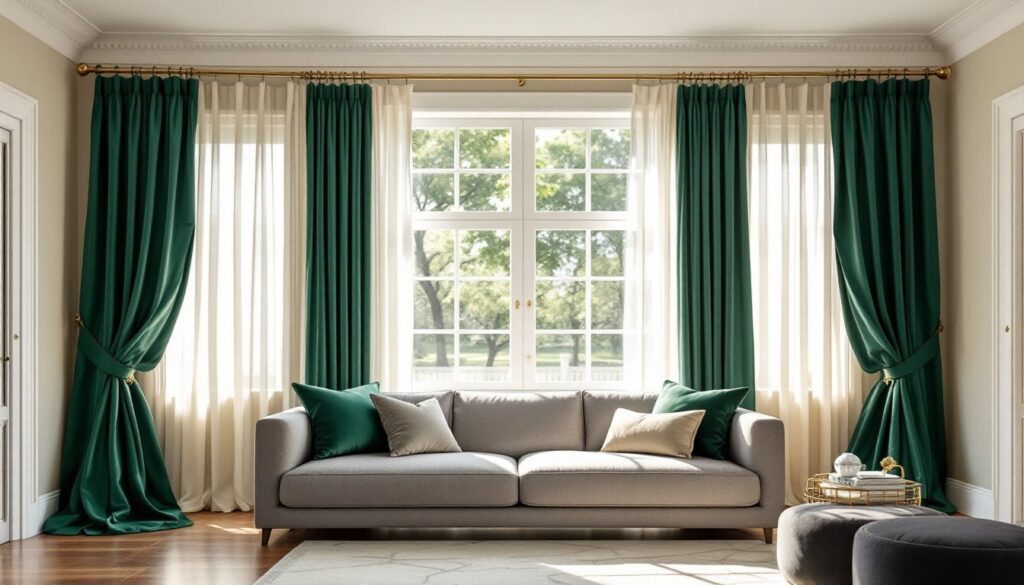
Solid, saturated colors remain the safest luxury choice. Deep jewel tones, emerald, sapphire, charcoal, burgundy, create instant richness. Neutrals like ivory, taupe, and warm grays offer versatility and let furniture and art take center stage. When selecting solids, view fabric samples in your actual room lighting, natural light at noon versus evening lamplight can shift undertones dramatically.
Tone-on-tone patterns, damasks, jacquards, subtle stripes, add dimension without busy distraction. These work beautifully in formal living rooms and pair well with patterned upholstery.
Bold prints and florals require confidence and balance. If your sofa, rug, or wall art already commands attention, stick with solid curtains. If the room feels blank, a large-scale botanical or geometric print can anchor the design. Interior designers often recommend patterns with a 12-inch or larger repeat for living room curtains, anything smaller reads as cluttered from a distance.
Metallic threads and embroidery elevate solids without overt pattern. Look for fabrics with subtle gold or silver woven details, or custom embroidered borders along leading edges and hems.
Consider how the curtains will photograph. Many high-end homes featured in design galleries rely on curtains that frame views and complement architectural details rather than compete with them.
Curtain Length and Hanging Styles That Elevate Your Space
Hanging height and curtain length transform the perceived proportions of a room.
Length rules: Luxury curtains should either kiss the floor (1/4 inch above), break (1-2 inches of fabric puddling on the floor), or puddle (4-6 inches of fabric pooled deliberately). Never hang curtains that hover awkwardly above the floor, this shortens the room visually and looks unfinished.
For standard 8-foot ceilings, order or make curtains 96 inches long. For 9-foot ceilings, go 108 inches. Custom drapery workrooms measure floor-to-ceiling and subtract 1/4 to 1/2 inch for a perfect kiss.
Hanging height: Mount rods or tracks as close to the ceiling as structurally possible, ideally 2-4 inches below the ceiling line or crown molding. This draws the eye upward and makes ceilings feel taller. Avoid the common mistake of mounting the rod just above the window frame: it breaks the vertical line and wastes wall space.
Pleat styles affect formality:
- Pinch pleats (double or triple) are classic and tailored, requiring rings or traverse rods.
- Ripplefold (also called wave or S-fold) creates a continuous, sleek wave pattern, very modern and architectural.
- Grommet panels work for casual spaces but rarely suit true luxury settings due to visible hardware and uneven folds.
- Rod pocket styles look dated unless used for sheer underlayers.
If your living room has floor-to-ceiling windows or sliding glass doors, consider ceiling-mounted tracks for a seamless, built-in look favored in contemporary upscale interiors.
Hardware and Accessories: The Finishing Touch
Curtain hardware is structural and decorative, cheap rods sag, rattle, and cheapen the entire treatment.
Rod material and diameter: For luxury curtains (especially heavy velvet or lined silk), use rods with a 1.5-inch to 2-inch diameter. Steel, wrought iron, or solid brass handles the weight without bowing. Avoid hollow aluminum unless the span is under 48 inches.
Mounting brackets: Use center support brackets for any rod span over 60 inches to prevent sagging. Most luxury drapery requires a bracket every 30-36 inches.
Finials are the decorative ends. Choose styles that complement your room’s aesthetic, crystal or glass for glam, turned wood for traditional, sleek metal for modern. Scale matters: large windows need proportionally larger finials (3-6 inches in diameter).
Traverse rods vs. decorative rods: Traverse rods with cord-pull or motorized mechanisms let you open and close curtains without touching the fabric, essential for delicate silks or high, hard-to-reach windows. Decorative rods with rings suit stationary panels or curtains you open manually.
Motorization is increasingly standard in luxury installs. Systems like Somfy or Lutron integrate with smart home controls and prevent fabric wear from repeated handling. Expect to budget $300-800+ per window for motorized tracks or rods, plus installation.
Tiebacks and holdbacks: Rope tiebacks with tassels, fabric bands, or metal holdbacks keep curtains neatly gathered during the day. Position holdbacks at 1/3 to 1/2 the height of the curtain from the floor for balanced proportions.
Safety note: If children or pets are present, avoid long cord pulls that pose strangulation hazards. Use cordless motorization, wand controls, or breakaway tassels.
DIY Installation Tips for a Professional Look
Installing luxury curtains isn’t complicated, but precision and the right tools make the difference between custom and sloppy.
Tools you’ll need:
- Drill/driver with bits for your wall type (masonry bits for brick, standard twist bits for wood studs)
- Stud finder (magnetic or electronic)
- Level (48-inch minimum for long spans)
- Tape measure
- Pencil
- Step ladder tall enough to reach the ceiling comfortably
- Wall anchors (toggle bolts for drywall, sleeve anchors for masonry) rated for the curtain weight plus hardware
Step-by-step installation:
-
Measure and mark. Decide on rod height (2-4 inches below ceiling) and width (extend 6-12 inches beyond each side of the window frame for full coverage and generous stacking when open). Mark bracket positions with a pencil.
-
Locate studs. Use a stud finder to locate framing. Whenever possible, screw brackets directly into wall studs or ceiling joists, drywall alone won’t support heavy curtains long-term. Mark stud centers.
-
Install brackets. If studs align with your bracket positions, drill pilot holes and drive screws. If not, use heavy-duty toggle bolts rated for at least 30-50 lbs per anchor. For very heavy curtains (velvet, layered treatments), consider blocking, install a horizontal 1×3 board between studs behind the drywall, secured to studs, then mount brackets to the blocking.
-
Check level. Before fully tightening brackets, place the rod and use a level across its length. Adjust brackets as needed. Even 1/8-inch variance over a long span is visible.
-
Hang curtains. Attach rings or slide panels onto the rod, then place the rod in brackets. For heavy curtains, have a second person help support the weight.
-
Adjust and dress. Once hung, adjust pleats so they’re evenly spaced. For formal drapery, “train” the pleats by hand, arrange each fold and secure with soft fabric ties for 24-48 hours to set the shape.
Common mistakes:
- Mounting too low or too narrow
- Using wimpy anchors that pull out under weight
- Forgetting to account for clearance (radiators, furniture, door swings)
- Not pre-measuring curtain panel width against the rod, panels should overlap 3-4 inches at center when closed
When to call a pro: If you’re installing motorized tracks, ceiling-mounted systems in plaster or concrete ceilings, or custom drapery worth over $2,000, hire a professional installer. Many drapery workrooms offer installation as part of the package. Interior design trends highlighted on sites like MyDomaine often showcase custom installations that rely on expert fitting and hidden hardware for that seamless, built-in look.
Conclusion
Luxury curtains are an investment in comfort, style, and how a living room feels every day. The right fabric, proper lining, precise installation, and quality hardware turn windows into architectural features rather than afterthoughts. Take time to measure accurately, choose materials that suit your lifestyle, and don’t cut corners on mounting, your living room will reward you with years of elegance and function.