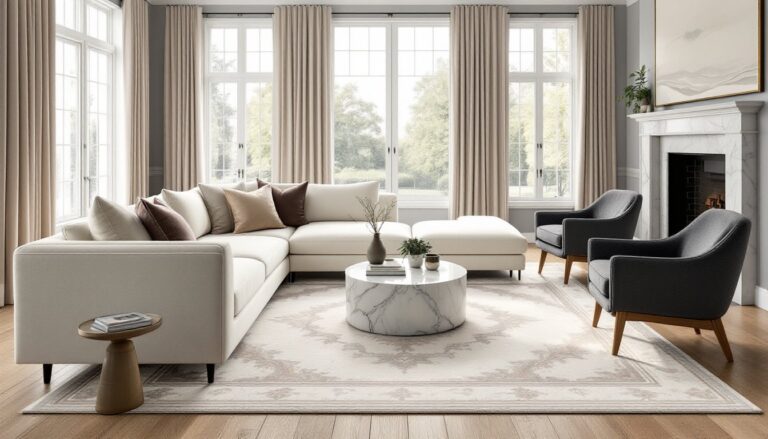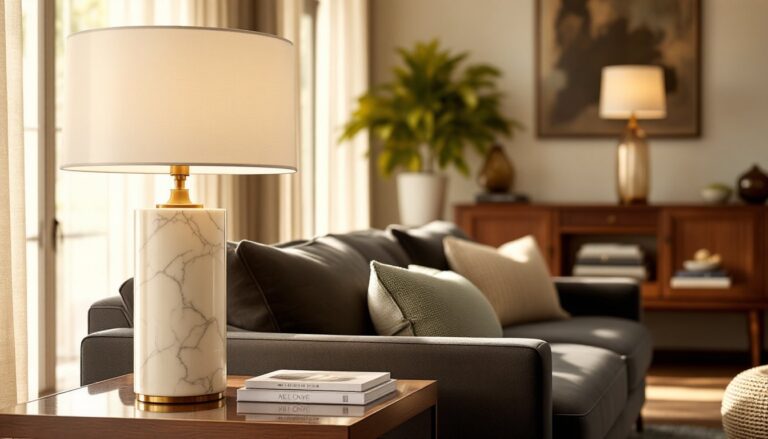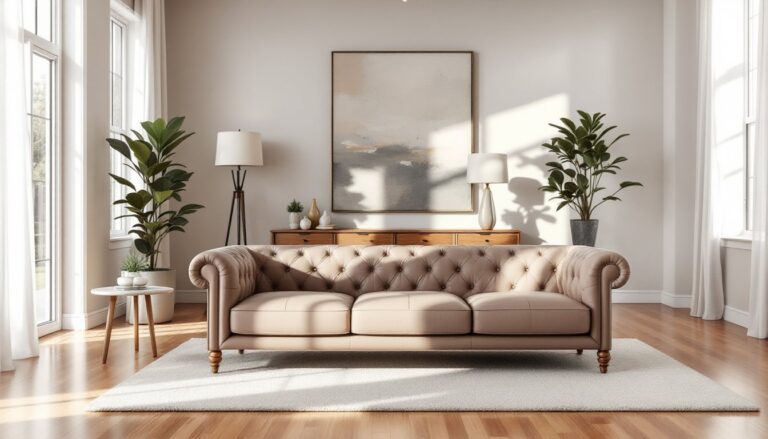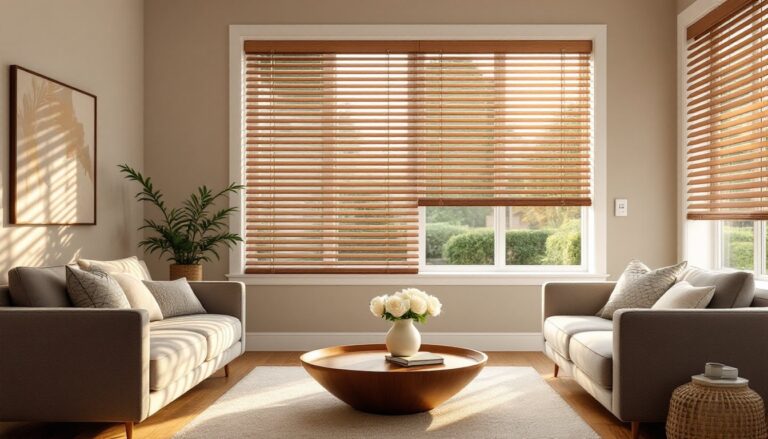
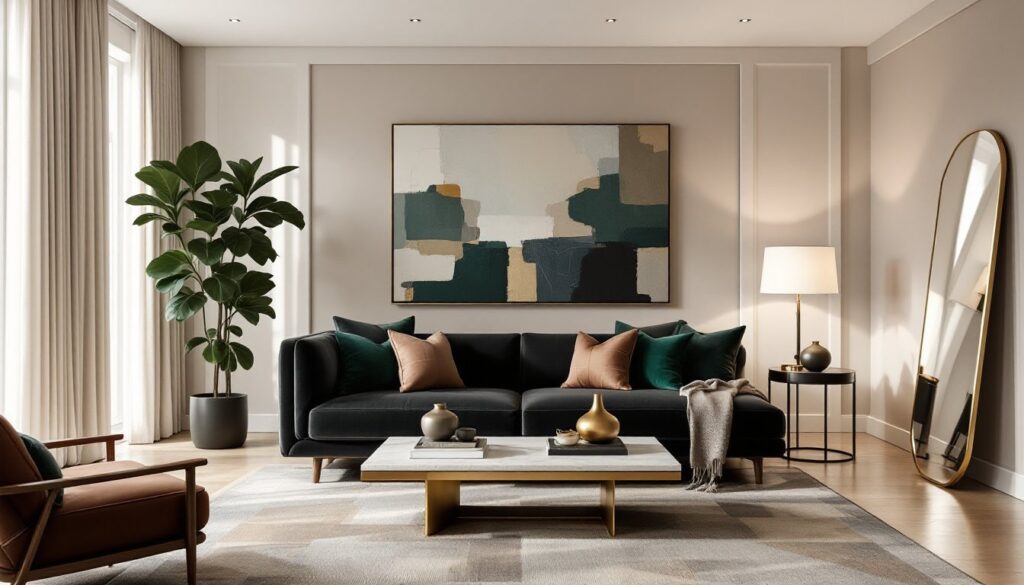
Creating a luxury living room isn’t about throwing expensive items together and hoping they work. It’s about intentional choices, layering quality materials, balancing proportion, and understanding what actually elevates a room from “nice” to “walk-in-and-exhale elegant.” Whether you’re working with a blank slate or upgrading what’s already there, the same principles apply: invest where it counts, edit ruthlessly, and build a space that feels curated, not cluttered. This guide walks through the core elements that define high-end living room design in 2026, from color decisions to lighting strategy.
Table of Contents
ToggleKey Takeaways
- Luxury living room decor is built on three pillars: quality over quantity, proper proportion, and cohesion—restraint and intentional choices matter more than expensive clutter.
- Invest in a high-quality sofa with hardwood frames, eight-way hand-tied springs, and dense foam (2.0+ lbs per cubic foot) as the anchor piece rather than multiple mediocre furniture items.
- Layer textures and premium materials—combine smooth, rough, soft, and hard elements like wide-plank hardwood, wool rugs, velvet pillows, and linen drapes—to create depth and visual interest.
- Implement a three-tier lighting strategy with ambient (dimmer-controlled recessed cans), task (table and floor lamps), and accent lighting to avoid harsh shadows and set flexible mood.
- Choose a timeless neutral color palette (warm whites, greiges, charcoals, taupes) with intentional jewel-tone or metallic accents that won’t date the room within a few years.
- Keep wall art, decorative accents, and accessories curated and purposeful—one large statement piece outperforms a cluttered gallery wall, and every item should earn its place.
What Defines Luxury Living Room Decor?
Luxury living room decor boils down to three things: quality over quantity, proportion, and cohesion. A luxury space doesn’t need to be packed with furniture or loaded with ornate details. In fact, restraint is often the hallmark of high-end design.
Start with the fundamentals. Quality materials, solid hardwood frames, full-grain leather, natural stone, and metals like brass or nickel, wear better and look richer than veneers or composites. Check joinery on furniture: dovetail joints and mortise-and-tenon construction outlast stapled or glued pieces.
Proportion matters more than most DIYers realize. An oversized sectional in a small room kills flow and makes everything look cheap, no matter the price tag. Conversely, undersized furniture in a large space reads as afterthought. Measure your room’s dimensions and map out scaled furniture placement before buying anything.
Cohesion ties it all together. A luxury room has a clear design thread, whether that’s a tonal palette, a repeated metal finish, or a consistent material theme. If you’re pulling from multiple styles (modern sofa, vintage coffee table, rustic accent), there needs to be a unifying element. Often, it’s the color palette or the finish on hardware and lighting.
Selecting a Sophisticated Color Palette
Neutral bases dominate luxury interiors for a reason: they don’t compete with furniture or art, and they’re easier to evolve over time. Think warm whites (not stark builder white), greiges, charcoals, taupes, and soft blacks. These create a backdrop that lets texture and form take center stage.
If painting walls, skip the flat sheen. Eggshell or satin finishes reflect subtle light and feel more polished than flat paint, which can look chalky in high-traffic rooms. For trim and molding, semi-gloss in a crisp white (like Benjamin Moore’s Simply White or Sherwin-Williams’ Pure White) adds crispness without yellowing over time.
Accent colors should be intentional, not random. Jewel tones, emerald, sapphire, deep burgundy, work well in velvet upholstery or drapery. Metallics (brass, aged bronze, brushed nickel) add warmth without reading as “color.” Avoid trendy palettes that’ll date the room in two years. Classic combinations, navy and cream, charcoal and blush, olive and tan, have staying power.
Consider the room’s natural light. North-facing rooms skew cooler and benefit from warmer neutrals (beiges, warm grays). South-facing spaces can handle cooler tones without feeling sterile. Test paint samples on multiple walls and view them at different times of day before committing.
Investing in Statement Furniture Pieces
One high-quality sofa beats three mediocre ones. Luxury living rooms are anchored by statement furniture that’s built to last and designed to impress. Start with the sofa, it’s the visual and functional centerpiece.
Look for hardwood frames (kiln-dried oak, maple, or walnut) and eight-way hand-tied springs in the seat deck. This construction method distributes weight evenly and prevents sagging. Foam density matters: 2.0 lbs per cubic foot or higher holds shape longer. Avoid particle board frames and sinuous (S-shaped) springs unless you’re planning to replace the piece in five years.
Leather and performance fabrics work well in high-use living rooms. Full-grain leather develops patina: top-grain is more uniform but still durable. For upholstery, look at brands offering Crypton or Sunbrella performance treatments if you have kids or pets. Linen and velvet read as luxe but require more maintenance.
Coffee tables and side tables should complement, not match. Mixing materials, a marble-top coffee table with walnut side tables, for instance, adds visual interest. Ensure the coffee table height aligns with your sofa seat (typically 16–18 inches). Overhang should be minimal: the table edge should sit roughly even with or slightly inside the sofa’s front edge.
For modern furniture layouts, leave at least 30 inches of walkway space around seating groups and ensure furniture arrangement encourages conversation without crowding.
Layering Textures and Premium Materials
Luxury is tactile. A room that looks expensive but feels one-note falls flat. Layering textures, smooth, rough, soft, hard, creates depth and keeps the eye moving.
Start with flooring. Wide-plank hardwood (5 inches or wider, preferably 7–9 inches) in white oak, walnut, or European oak reads as upscale. Engineered hardwood works well over concrete slabs or radiant heat: just specify ⅝-inch total thickness with a 4mm wear layer so it can be refinished. If your subfloor isn’t level (check with a 6-foot level: more than ⅛ inch over 6 feet requires leveling compound), address it before installation.
Area rugs anchor seating groups and soften acoustics. Wool or silk rugs hold up better than synthetics and feel substantial underfoot. Size matters: the rug should extend at least 12 inches beyond the front legs of all seating pieces, or go large enough that all furniture sits completely on the rug. Skimpy rugs make a room feel disjointed.
Window treatments add softness and control light. Linen drapes in a neutral tone work in most settings: hang them high and wide (mount rods 4–6 inches above the window frame and extend 6–10 inches beyond each side) to make ceilings feel taller and windows larger. For blackout needs, layer with cellular shades or roller shades behind the drapes.
Throw pillows and blankets are easy texture layering. Mix velvet, linen, wool, and faux fur in a cohesive palette. Avoid matching pillow sets: opt for varied sizes (22-inch, 20-inch, 18-inch) and one or two textured lumbar pillows. Designers often reference curated interiors for layering examples that feel effortless.
Lighting Design That Elevates Ambiance
Bad lighting kills luxury faster than cheap furniture. A single overhead fixture casts harsh shadows and flattens the room. Layered lighting, ambient, task, and accent, is non-negotiable.
Ambient lighting provides overall illumination. Recessed cans (4-inch or 6-inch) on dimmer switches work well: space them roughly 4 feet apart in a grid. Avoid placing them directly over seating, which creates unflattering downlight on faces. Aim for 2,000–3,000 lumens total in a standard living room, adjustable via dimmer.
Chandeliers or pendant fixtures add visual weight and elegance. Hang a chandelier so the bottom sits 30–34 inches above a coffee table or 7 feet above the floor in open space. For dining areas adjacent to the living room, center the fixture over the table with the bottom 30–36 inches above the tabletop.
Table lamps and floor lamps provide task and accent lighting. Use three-way bulbs (50/100/150-watt equivalent LEDs) for flexibility. Lamp height should align roughly with eye level when seated, typically 58–64 inches from floor to top of shade for floor lamps, 24–27 inches for table lamps on end tables.
Consider color temperature. Warm white LEDs (2700K–3000K) mimic incandescent bulbs and feel inviting. Cooler temps (3500K+) read as clinical. Stick with warm tones in living spaces.
Dimmer switches are essential. Install on all overhead circuits and use LED-compatible dimmers to avoid flickering. This allows you to shift ambiance from bright and functional to soft and intimate. Integrating smart home lighting systems enables scene control and scheduling for added convenience.
Adding Curated Art and Decorative Accents
Art and accents are where personality enters the room, but restraint still applies. Curated means intentional, not cluttered. Each piece should earn its place.
Wall art should be scaled to the furniture below it. A single large piece (48–60 inches wide) over a sofa works better than a gallery wall of mismatched frames, unless you’re committing to a cohesive grid layout. Hang art so the center sits at 57–60 inches from the floor (eye level). For art above a sofa, leave 6–12 inches of space between the top of the sofa back and the bottom of the frame.
Original art or limited-edition prints carry more weight than mass-produced posters. If budget’s tight, prioritize one statement piece over several small ones. Frame quality matters, use acid-free mats and UV-protective glass or acrylic to preserve the work.
Sculptural objects add three-dimensional interest. Group items in odd numbers (three or five) and vary height and shape. A tall ceramic vase, a low brass tray, and a medium-height sculptural object create visual rhythm on a console table. Avoid tchotchkes: if it doesn’t have form, texture, or meaning, it’s clutter.
Books styled on coffee tables or shelves add color and texture. Stack oversized art books horizontally and top with a small object. Vertical arrangements work on shelves: mix books with a few decorative pieces rather than lining shelves solid with spines.
Greenery softens hard edges and brings life into the space. Large potted plants (fiddle leaf figs, rubber trees, monstera) work as floor accents. Smaller plants suit shelves or side tables. If natural light is limited, high-quality faux plants are acceptable, just invest in realistic ones, not cheap silk versions. Many luxury home interiors balance organic elements with refined finishes.
Mirrors amplify light and make rooms feel larger. Oversized leaning mirrors (at least 36 inches wide) or large-framed wall mirrors add impact. Place mirrors opposite windows to reflect natural light, or use them to bounce lamplight around the room.
Conclusion
Luxury living room design isn’t about following a formula, it’s about making deliberate choices that add up to a cohesive, elevated space. Focus on quality materials, proper scale, and layered details. Edit aggressively, invest in foundational pieces, and let each element serve a purpose. Done right, the room should feel polished but livable, impressive but not precious. That’s the balance worth building toward.