
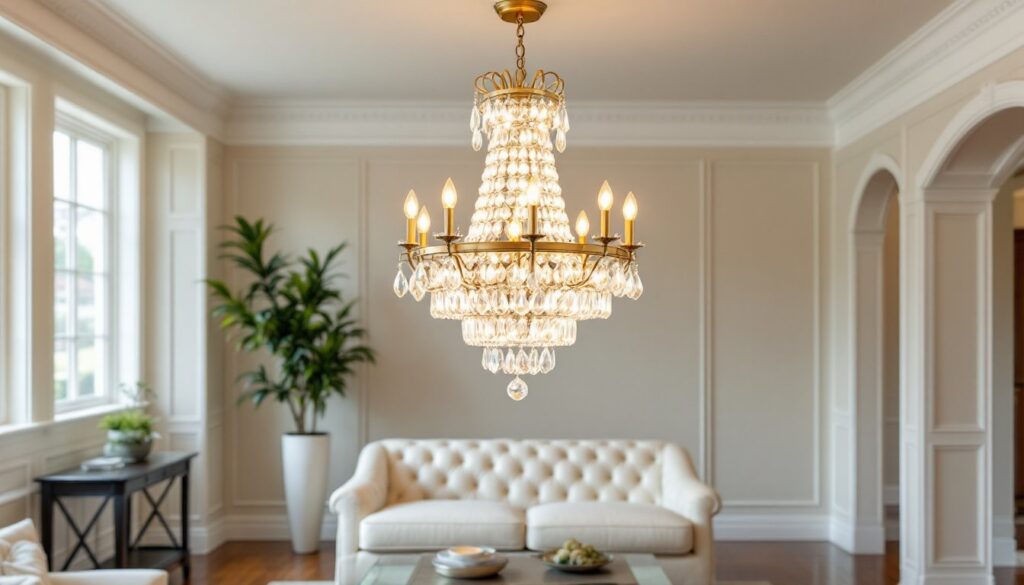
A luxury chandelier isn’t just a light fixture, it’s a statement piece that can redefine the entire feel of a living room. Whether someone’s upgrading a traditional space or building out a new home, the right chandelier anchors the room, sets the mood, and shows an eye for design. But choosing one involves more than browsing pretty pictures online. Scale, height, wiring requirements, and installation complexity all matter. This guide walks through the key decisions, from selecting a style that fits the space to hanging it safely and keeping it looking sharp for years.
Table of Contents
ToggleKey Takeaways
- A luxury chandelier for living room serves as both a focal point and statement piece that transforms the entire room’s aesthetic while providing layered, dimmable ambient lighting.
- The correct chandelier size is calculated by adding your room’s length and width in feet, then converting to inches—a 14×16 room needs roughly a 30-inch chandelier to avoid it looking too small or overwhelming.
- Proper installation requires turning off power at the breaker, confirming a securely mounted junction box rated for the fixture’s weight, and enlisting a helper since these heavy fixtures demand overhead electrical work.
- Crystal chandeliers with 24% lead content or higher offer superior light dispersion, while contemporary designs with geometric frames or exposed Edison bulbs suit modern spaces and weigh less for easier installation.
- Regular maintenance—weekly dusting, twice-yearly deep cleaning of crystals with isopropyl alcohol solution, and annual hardware checks—preserves the chandelier’s brilliance and prevents costly damage from buildup.
- High-quality materials like hand-cut crystal, brushed brass, and oil-rubbed bronze age gracefully and signal thoughtful home updates to buyers, justifying the luxury chandelier investment for both style and resale value.
Why a Luxury Chandelier Transforms Your Living Room
A well-chosen chandelier does more than illuminate, it creates a focal point that pulls the whole room together. In living rooms with high or vaulted ceilings, a chandelier fills vertical space that would otherwise feel empty or unfinished. It draws the eye upward and gives the room architectural weight.
Lighting layering is a core principle in interior design. Ambient light from a chandelier works alongside task lighting (floor lamps, reading lights) and accent lighting (picture lights, sconces) to create depth and flexibility. A chandelier provides that central ambient glow, especially when paired with a dimmer switch, which allows control over mood and energy use.
Materials matter, too. Luxury chandeliers often feature hand-cut crystal, brushed brass, oil-rubbed bronze, or polished nickel, finishes that reflect light and add texture. These materials age well and hold up better than cheaper alternatives like plastic or painted metal. The craftsmanship shows in the details: how the arms attach, the weight of the crystals, the finish consistency.
From a resale perspective, high-quality lighting fixtures signal that a home has been thoughtfully updated. Buyers notice lighting, and a standout chandelier can make a living room memorable during showings.
Top Luxury Chandelier Styles for Modern Living Rooms
Crystal Chandeliers: Timeless Elegance
Crystal chandeliers remain the gold standard for formal living rooms. Traditional crystal designs feature multiple tiers, candelabra-style bulbs, and cascading prisms that refract light into rainbows across walls and ceilings. Brands often use Swarovski crystal or K9 optical crystal for clarity and brilliance.
Modern crystal chandeliers simplify the silhouette, fewer tiers, cleaner lines, sometimes paired with matte black or brass frames. They work well in transitional spaces where homeowners want elegance without the ornate Victorian look. Crystal requires regular dusting, but the visual payoff is worth the effort.
When selecting crystal, check the lead content. Full-lead crystal (24% lead oxide or higher) offers the best light dispersion but costs more. Lead-free options still look great and are lighter, which can simplify installation on older ceiling joists.
Contemporary and Minimalist Designs
Contemporary chandeliers strip away excess. Think geometric cage frames, exposed Edison bulbs, linear suspension designs, or sculptural metal forms. These styles suit open-concept living rooms, mid-century modern homes, and spaces where the chandelier should complement rather than dominate.
Materials lean industrial or organic: blackened steel, raw brass, wood beads, or frosted glass globes. Sputnik chandeliers, radiating arms with bulbs at the tips, have made a strong comeback and work especially well in rooms with modern furnishings.
Minimalist doesn’t mean small. A large-scale geometric chandelier can still command attention, but the design language is restrained. These fixtures often weigh less than crystal chandeliers, making them easier to hang, though they still require proper junction box support rated for the fixture’s weight.
Choosing the Right Size and Height for Your Space
Getting the size wrong is the most common chandelier mistake. A fixture that’s too small disappears. Too large, and it overwhelms the room or creates head-knocking hazards.
Diameter calculation: Add the room’s length and width (in feet), then convert that sum to inches. For example, a 14-foot by 16-foot living room suggests a chandelier around 30 inches in diameter (14 + 16 = 30). This is a starting point, not a hard rule, open floor plans or rooms with multiple seating areas may call for larger fixtures.
Height and clearance: In living rooms without furniture underneath, hang the chandelier so the bottom sits 7 to 7.5 feet above the floor. This keeps it out of the traffic path while maintaining visual presence. For fixtures over a coffee table or seating area, aim for 30 to 36 inches of clearance between the table surface and the chandelier’s lowest point.
Ceiling height matters. Standard 8-foot ceilings limit chandelier options, look for semi-flush or flush-mount designs with some decorative interest. 10-foot or higher ceilings accommodate grand, multi-tier fixtures. In rooms with vaulted or cathedral ceilings, homeowners can extend the chandelier down using adjustable downrods or chain, but balance is key. Too much drop makes the fixture feel disconnected from the ceiling plane.
Weight is a hidden factor. Most residential ceiling boxes are rated for 50 pounds. Heavier chandeliers require a fan-rated or heavy-duty junction box secured directly to a ceiling joist or blocking. Check the fixture’s specs before buying, especially for large crystal or wrought-iron designs that can exceed 75 pounds.
Installation Tips for DIY Enthusiasts
Installing a chandelier is within reach for confident DIYers, but it’s not a solo job. These fixtures are heavy, awkward, and require working overhead with live electrical wiring.
Safety first: Turn off power at the breaker, not just the wall switch. Use a non-contact voltage tester to confirm the circuit is dead before touching any wires. Wear safety glasses, working overhead means debris and dust fall directly into the face.
Tools needed:
- Adjustable ladder or sturdy step stool
- Screwdriver set (flathead and Phillips)
- Wire strippers
- Wire nuts (usually included with the fixture)
- Voltage tester
- Helper to hold the fixture while connecting wires
Step-by-step:
-
Check the junction box. Confirm it’s securely fastened to a joist or blocking. If the existing box wobbles or is plastic, replace it with a metal fan-rated box before proceeding. This often means cutting into drywall, patching, and repainting, budget time for this.
-
Assemble the chandelier on the ground. Most luxury fixtures arrive partially disassembled. Follow the manufacturer’s instructions to attach arms, crystals, or shades before lifting it. This is far easier than fumbling with small parts on a ladder.
-
Install the mounting bracket. Attach the chandelier’s mounting plate or crossbar to the junction box using the provided screws. Make sure it’s level, use a torpedo level if needed.
-
Connect the wiring. Match wire colors: black to black (hot), white to white (neutral), and bare copper or green to ground. Twist connections clockwise, secure with wire nuts, and wrap with electrical tape for extra insurance. Tuck wires neatly into the box.
-
Hang the chandelier. Lift the fixture (this is where the helper is essential) and hook or screw it onto the mounting bracket. Some designs use a threaded nipple and collar nut: others use a hook-and-chain system. Double-check that the canopy sits flush against the ceiling.
-
Install bulbs and test. Use bulbs that match the fixture’s specifications, wattage limits are listed in the manual and often stamped inside the sockets. Turn the breaker back on and test. If the light doesn’t turn on, shut off power again and recheck wire connections.
When to call a pro: If the ceiling box needs relocating, if the circuit requires upgrading (many chandeliers need a dedicated 15-amp circuit), or if the fixture weighs more than the DIYer feels comfortable handling, hire a licensed electrician. Most charge $150–$400 for chandelier installation, depending on complexity and region. Electrical work done wrong is a fire hazard and often voids homeowner’s insurance.
Maintenance and Care for Long-Lasting Brilliance
Luxury chandeliers collect dust, grease, and grime faster than other fixtures because of their intricate designs and upward-facing surfaces. Regular cleaning prevents buildup that dims light output and dulls finishes.
Dusting: Use a microfiber duster or lambswool duster weekly to keep surface dust off crystals and arms. For hard-to-reach fixtures, an extendable duster works well. Avoid feather dusters, they redistribute dust rather than capturing it.
Deep cleaning crystal: Twice a year, clean crystal prisms individually. Turn off power and let bulbs cool. Lay a drop cloth or towels underneath. Mix a solution of one part isopropyl alcohol to three parts distilled water in a spray bottle. Spray each crystal, wipe with a lint-free cloth, and let air-dry. For removable crystals, take them down, wash in the solution, and rehang.
Some pros recommend professional lighting cleaning services for intricate or extremely large fixtures, especially in homes with high ceilings where access is difficult. Costs run $100–$300 but save hours of ladder time.
Metal finishes: Wipe brass, bronze, or nickel frames with a damp microfiber cloth. Avoid harsh chemicals or abrasive pads, they strip protective coatings. For tarnished brass, use a brass polish sparingly and buff with a soft cloth. Oil-rubbed bronze should never be polished: it’s meant to develop a patina.
Bulb replacement: Use the correct bulb type and wattage. Many luxury chandeliers now support LED candelabra bulbs, which last 15,000–25,000 hours and produce less heat than incandescent. Dimmable LEDs require a compatible dimmer switch, older dimmers can cause flickering or buzzing.
Wiring checks: Every few years, turn off power and inspect visible wiring connections inside the canopy. Look for frayed insulation, loose wire nuts, or corrosion. Chandelier wiring endures more stress than fixed fixtures due to weight and vibration, so proactive checks prevent failures.
Seasonal adjustments: In homes with significant temperature swings, metal components expand and contract. Check mounting hardware annually, tighten any loose screws or collar nuts. A chandelier that wobbles or sways slightly may have a loose connection at the mounting bracket.