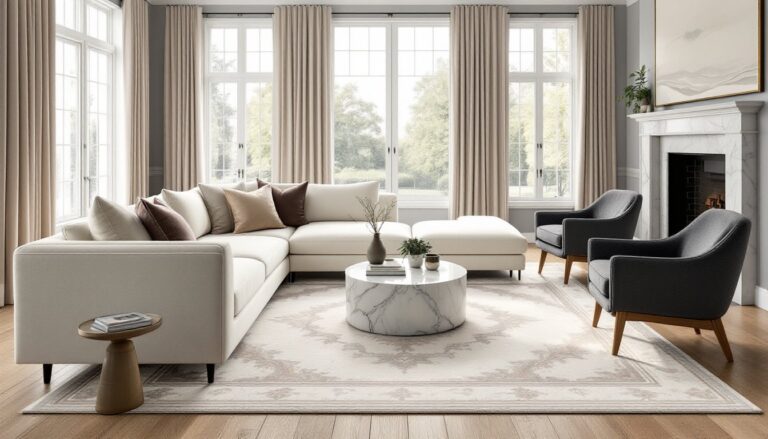
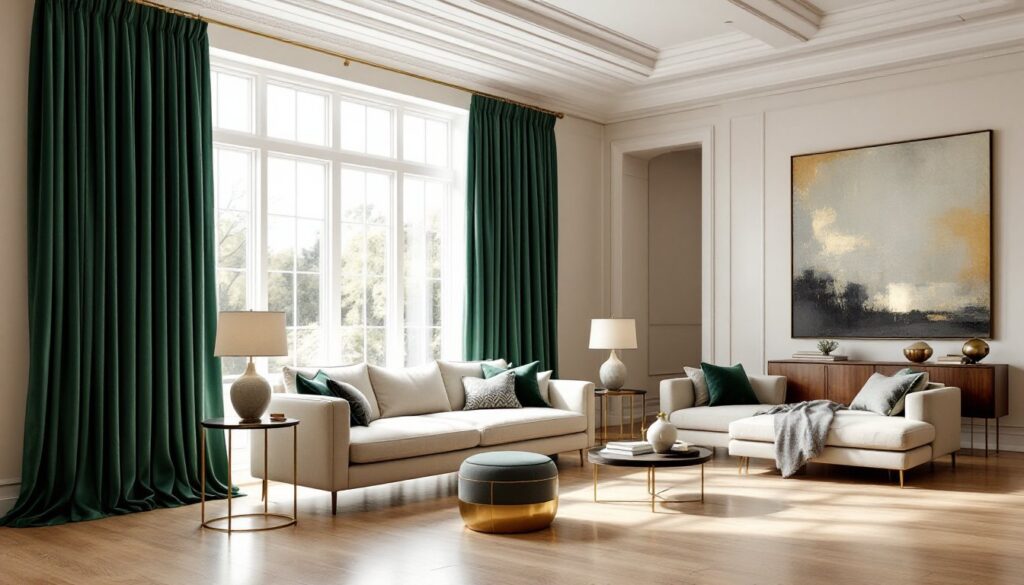
Curtains aren’t just window dressing, they’re architectural elements that frame your space, control light, and set the tone for your entire living room. The right curtains can make a standard room feel like a designer showroom, while cheap panels can undermine even the most expensive furniture. If you’re upgrading your living room with luxury curtains, you’re not just buying fabric. You’re investing in craftsmanship, durability, and a finish that photographs can’t quite capture. This guide walks through fabric choices, styles, color decisions, and installation details that separate high-end results from amateur hour.
Table of Contents
ToggleKey Takeaways
- Luxury elegant living room curtains rely on heavier fabrics (8–12 oz per square yard), a fullness ratio of 2.5–3x the window width, and reinforced construction details like French seams and buckram headers to achieve sophisticated draping.
- Premium fabrics including silk dupioni, cotton or silk velvet, and high-quality linen blends deliver different aesthetic effects—from opulent drama to refined understated elegance—each requiring specific care and installation considerations.
- Pinch pleat and ripplefold styles offer timeless and modern elegance respectively, while ceiling height and window proportions should guide style selection to maximize the room’s visual impact.
- Neutral tones and jewel-toned curtains serve different design goals: neutrals provide versatility and let other elements shine, while jewel tones create instant drama and work exceptionally well in velvet fabrics.
- Quality hardware, proper rod diameter (1–2 inches for luxury panels), and correct installation height (4–12 inches above the window casing) are essential to prevent sagging and ensure a high-end finished appearance.
- Motorized curtain systems, though requiring a substantial budget of $800–$2,000 per window, provide both practical benefits and integration with smart home setups for contemporary luxury living spaces.
What Makes a Curtain Luxurious and Elegant?
Luxury in curtains isn’t about price tags, it’s about weight, drape, and finish quality. Pick up a budget panel and a high-end one side by side, and you’ll feel the difference immediately. Premium curtains use heavier fabrics (8-12 oz per square yard or more), which hang in clean vertical lines instead of bunching or sagging.
Fullness ratio matters too. Elegant curtains typically use 2.5 to 3 times the window width in fabric, creating deep, sculptural folds when drawn. A skimpy 1.5x ratio looks flat and cheap, no matter the fabric. Custom workrooms calculate fullness based on fabric type, velvet needs less (2x works) because of its bulk, while lighter silks benefit from 3x for proper body.
Construction details separate the good from the great. Look for French seams or serged edges (not raw-cut hems), weighted corners, and interlining for structure. Luxury curtains often include a separate blackout or thermal layer sandwiched between face fabric and lining, adding heft without compromising the outer appearance. The header, pinch pleat, goblet, or tailored ripplefold, should be reinforced with buckram or a stiffened band, not just sewn puckers that collapse after a season.
Premium Fabrics for Luxury Living Room Curtains
Fabric choice drives everything: how curtains hang, how they age, and how much maintenance they demand. You’ll find the best options split between theatrical opulence and refined understatement.
Silk and Velvet: The Ultimate Opulent Choices
Silk dupioni and silk taffeta bring a subtle sheen and crisp hand that catch light beautifully. Dupioni has natural slubs (small lumps in the weave) that add texture: taffeta is smoother and more formal. Both wrinkle easily and fade in direct sun, so they’re best suited for windows with UV film or for rooms where curtains stay closed during peak daylight. Expect to dry-clean silk curtains, water stains them permanently.
Cotton velvet and silk velvet deliver maximum drama. Velvet’s pile creates depth and richness no flat-weave fabric can match, and it absorbs sound, making large living rooms feel cozier. Cotton velvet (often a cotton-rayon blend) is more affordable and durable than silk velvet, which is feather-soft but crushes easily and costs $80–$150 per yard. Velvet panels are heavy, plan on robust curtain rods rated for at least 20 lbs per bracket. The pile direction matters: hang panels so the nap runs down, or light will reflect inconsistently.
Many high-end spaces featured in Architectural Digest showcase velvet curtains paired with minimalist furniture to let the fabric take center stage.
Linen and High-Quality Cotton Blends
If silk and velvet feel too formal, Belgian linen and linen-cotton blends offer relaxed elegance. Linen’s natural texture and matte finish suit both modern and traditional interiors. It wrinkles, that’s part of the charm, but if you want a crisper look, choose a linen-polyester blend (usually 70/30 linen to poly). The synthetic fiber reduces wrinkling and fading without sacrificing the natural drape.
Heavyweight cotton sateen (300+ thread count) is another solid choice. It has a slight sheen, takes dye beautifully for rich colors, and holds up to sun exposure better than silk. Cotton blends also tolerate occasional machine washing on delicate cycles, though dry cleaning extends their life. For a classic look that suits homes ranging from luxury estates to updated colonials, linen or cotton in neutral tones is foolproof.
Choosing the Right Curtain Style for an Elegant Living Room
Style decisions hinge on ceiling height, window proportions, and the room’s overall formality.
Pinch pleat (also called French pleat) is the gold standard for traditional elegance. Fabric is gathered into evenly spaced pleats at the header, creating structured folds that run the full length of the panel. Pinch pleats require rings or pins to attach to rods, and they stack neatly when open. They’re labor-intensive to sew, so custom panels start around $400–$800 per window depending on fabric and size.
Ripplefold or wave-fold curtains deliver modern, minimalist elegance. Panels hang from a track system with evenly spaced carriers, creating continuous S-curves across the width. The effect is clean and architectural, no fussy pleats. Ripplefold works beautifully in contemporary interiors and is the go-to style for luxury modern houses with floor-to-ceiling glass. Note: ripplefold requires a specialized track system (like Kirsch Architrac or Silent Gliss), not a standard rod. Budget $15–$25 per linear foot for track hardware.
Goblet pleats and tailored panels with grommets are middle-ground options. Goblet pleats, rounded, wine-glass-shaped pleats often stuffed with tissue or batting, add formality without being overly traditional. Grommet panels (metal rings punched through the header) work on standard rods and suit casual-luxe spaces, though they’re trickier to integrate into formal settings.
For rooms with high ceilings (10 feet or more), mount curtain hardware as close to the ceiling as structurally possible. This elongates the wall and makes windows feel grander. Standard practice is to hang the rod 4–6 inches above the window casing, but in luxury installs, that can stretch to 12–18 inches if ceiling height allows.
Color Palettes and Patterns That Elevate Luxury Spaces
Color and pattern choices can either amplify or undermine your fabric investment.
Neutral tones, ivory, champagne, greige, charcoal, taupe, are timeless and versatile. They let furniture and art take focus while adding textural richness. Neutrals also photograph well, a consideration if you’re planning to list your home eventually. Off-whites and warm grays pair with nearly any wall color and lighting condition. If you’re working with bold or jewel-toned furniture, neutrals keep the room from feeling chaotic.
Jewel tones, emerald, sapphire, deep burgundy, navy, create instant drama and work especially well in velvet. These shades absorb light, adding intimacy to large or high-ceilinged rooms. Pair jewel-toned curtains with metallic accents (brass rods, gold tiebacks) for a cohesive high-end look. Be mindful of undertones: emerald green can read warm or cool depending on whether it leans yellow or blue, and those undertones should harmonize with your wall paint.
Patterns should be subtle and large-scale. Small, busy prints look cluttered when gathered into folds. Tone-on-tone damask, oversized florals, or geometric jacquards add visual interest without overwhelming. Embroidered details, grosgrain trim, or contrasting banding along the leading edge also elevate plain panels. Designers often use patterns sparingly, one patterned element (curtains or upholstery, not both) keeps the room balanced.
If you’re unsure about color, professional designers featured on Elle Decor often recommend ordering fabric swatches and draping them in your space at different times of day. Natural and artificial light can shift how colors read, and a swatch that looks perfect in a showroom might clash with your west-facing afternoon sun.
Hardware and Installation Tips for a High-End Finish
Even $2,000 custom curtains look cheap on sagging hardware. Invest in quality rods, brackets, and finials that match the formality of your fabric.
Rod diameter should be proportional to curtain weight and window width. For luxury panels:
- 1-inch rods work for lightweight fabrics on windows under 6 feet wide.
- 1⅜-inch or 1⅝-inch rods suit medium-weight curtains (linen, cotton sateen) on 6–10 foot spans.
- 2-inch or larger rods are necessary for heavy velvet or silk on wide windows or if you’re using traversing (pull-cord) hardware.
Material matters. Wrought iron or solid brass rods support heavy loads without bowing: avoid hollow aluminum or cheap steel that flexes. Adjustable rods are convenient but often lack the rigidity of cut-to-length fixed rods. For a seamless look, many designers use recessed or ceiling-mounted tracks hidden by a fabric-wrapped cornice or pelmet.
Bracket spacing is critical. Standard spacing is every 4–5 feet, but heavy curtains need brackets every 3–4 feet to prevent sagging. If you’re mounting into drywall, use toggle bolts or anchors rated for 20+ lbs, especially if the rod spans more than 8 feet. Mounting into wall studs is ideal, but studs rarely align with window centers. A center support bracket (often decorative) can carry the load on wide spans.
Installation height sets the room’s proportions. For a luxurious, elongated look:
- Mount rods 4–12 inches above the window casing, depending on ceiling height.
- Panels should graze the floor or puddle 1–2 inches (called a “break”). Puddling, letting fabric pool on the floor, is very formal and traditional: breaking at the floor is cleaner and more modern.
Measure from the rod to the floor, not the window to the floor. A common DIY mistake is ordering panels based on window height and ending up with curtains that hang 6 inches short.
If you’re doing the install yourself, use a laser level to mark rod placement, even a ⅛-inch tilt is visible when panels are closed. Drill pilot holes to prevent wall cracking, and test-fit brackets before final tightening. For ideas on how high-end curtains integrate into broader interior schemes, design inspiration from MyDomaine often highlights the interplay between window treatments and furniture layouts.
Finally, if you’re working on a luxury modern mansion or any home with floor-to-ceiling windows, motorization is worth considering. Automated curtain systems (like Lutron or Somfy) integrate with smart home setups and prevent wear from daily hand-pulling. Expect to budget $800–$2,000 per window for motorized tracks and controls, plus electrical work if outlets aren’t already in place.