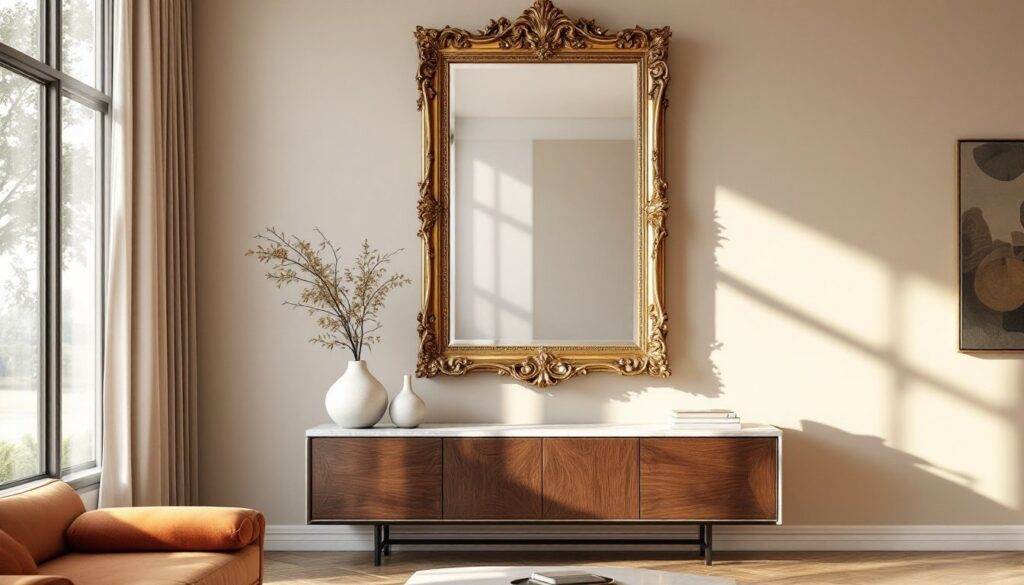
A well-placed luxury mirror doesn’t just reflect light, it redefines a living room’s entire character. Whether you’re working with a cramped apartment or a sprawling open-concept space, the right mirror can double visual square footage, anchor a focal wall, and inject serious design credibility. This isn’t about hanging any old reflective glass and calling it done. Luxury mirrors blend craftsmanship, materials, and scale to create impact that budget options simply can’t match. Here’s how to choose, place, and maintain mirrors that deliver both function and high-end style.
Table of Contents
ToggleKey Takeaways
- Luxury mirrors for living rooms serve three critical functions: amplifying light (increasing perceived brightness by 30–40%), creating visual depth to expand cramped spaces, and acting as high-impact statement pieces that elevate interior design.
- Strategic placement opposite windows, flanking fireplaces, or above consoles maximizes the impact of luxury mirrors, while proper mounting hardware and wall stud anchors ensure safety for mirrors weighing over 30 pounds.
- Ornate gold and silver frames pair with warm or cool color palettes respectively, while contemporary minimalist designs featuring frameless or slim metal profiles work best in modern living rooms—choose based on your room’s design language.
- Low-iron ultra-clear glass and substantial frame widths (4–8 inches for ornate styles, or slim 1–3 inch profiles for contemporary designs) distinguish luxury mirrors from budget alternatives and ensure lasting visual appeal.
- Proper maintenance using distilled water and vinegar solutions, weekly dusting of ornate frames, and professional resilvering when needed can extend a luxury mirror’s lifespan by decades while preserving its pristine appearance.
- Size matters significantly—for over-sofa placement, choose a luxury mirror spanning 50–75% of the sofa’s width, while ornate frames should measure at least 48 inches to avoid a cluttered appearance.
Why Luxury Mirrors Are Essential for Your Living Room
Luxury mirrors serve three critical roles in living room design: light amplification, spatial expansion, and architectural weight.
First, mirrors positioned opposite or adjacent to windows bounce natural light deeper into the room, reducing reliance on artificial lighting during daylight hours. In north-facing rooms or spaces with limited fenestration, a strategically placed mirror can shift the perceived brightness by 30–40%. This isn’t subtle, you’ll notice the difference immediately.
Second, mirrors create visual depth. A large-format mirror (60 inches or taller) on a narrow wall tricks the eye into perceiving additional square footage. This technique works especially well in rectangular living rooms where one dimension feels compressed. The reflection adds a layer of complexity that breaks up monotonous wall planes.
Third, luxury mirrors act as statement pieces. A hand-carved gilt frame or a minimalist floor mirror with beveled edges carries material presence that art prints and mass-market decor can’t replicate. High-end mirrors often feature solid hardwood frames, hand-applied finishes, and distortion-free glass (4mm to 6mm thickness with minimal waviness). These details matter when the mirror sits at eye level and under scrutiny.
Many modern luxury homes incorporate mirrors as architectural elements rather than afterthoughts, integrating them into wall paneling, fireplace surrounds, or custom millwork. That approach transforms a functional object into a design cornerstone.
Top Luxury Mirror Styles to Elevate Your Living Room
Ornate Gold and Silver Frames
Ornate frames dominated European interiors for centuries, and they still hold serious visual power in traditional, transitional, and even eclectic living rooms. Look for frames with hand-carved or molded details, acanthus leaves, scrollwork, beading, or egg-and-dart motifs. Authentic examples use basswood, mahogany, or oak substrates with applied gesso and metal leaf (real gold or silver leaf, not foil).
Gold frames pair naturally with warm color palettes: terracotta, deep greens, burgundy, or cream. They also complement brass hardware, warm-toned wood floors, and oil-rubbed bronze fixtures. Silver and pewter frames work better in cooler schemes with grays, blues, whites, and chrome or nickel accents.
Size matters here. An ornate frame under 36 inches can read as cluttered or fussy. Go big, 48 inches minimum, ideally 60 to 72 inches tall for over-sofa or mantel placements. The frame width typically runs 4 to 8 inches, adding substantial presence without overwhelming the glass.
One caution: ornate frames require visual breathing room. Don’t crowd them with competing artwork or dense gallery walls. Let the frame command its section of wall, supported by minimal flanking decor.
Minimalist and Contemporary Designs
Contemporary mirrors strip away ornamentation in favor of clean geometry, industrial materials, and precise proportions. Common materials include powder-coated steel, brushed aluminum, blackened iron, and walnut or oak veneers. Frame profiles stay slim, often 1 to 3 inches wide, or disappear entirely in frameless designs.
Frameless mirrors rely on beveled edges (typically 1-inch bevels at 5-degree angles) to define the perimeter and add subtle visual interest. These work beautifully in minimalist or Scandinavian-inspired living rooms where simplicity and negative space take precedence.
Contemporary designs often play with shape. Expect to see oversized rectangles with 2:1 or 3:1 proportions, perfect circles (48 to 60 inches in diameter), asymmetric polygons, or arched tops that nod to classical architecture without the ornate detailing. Designers at Elle Decor frequently feature oversized round mirrors as counterpoints to the angular lines common in modern furniture.
For industrial or loft-style living rooms, consider mirrors with rivet detailing, exposed fasteners, or metal mesh backing. These elements add texture while maintaining the minimalist ethos.
Contemporary mirrors also lend themselves to custom integration. If you’re renovating, consider recessing a floor-to-ceiling mirror into a wall niche or installing it as a sliding panel in front of media storage. That level of integration requires coordination during framing, but it delivers a seamless, high-end result.
How to Choose the Perfect Luxury Mirror for Your Space
Start by measuring the wall and any furniture the mirror will sit above or beside. For over-sofa placement, the mirror should span 50–75% of the sofa’s width. A 90-inch sofa pairs well with a mirror 45 to 68 inches wide. Narrower than that looks timid: wider risks visual imbalance.
For mantel installations, the mirror width should not exceed the mantel shelf width. Ideally, it’s 6 to 12 inches narrower to maintain proportion. Vertical orientation works best here, choose a mirror at least 1.5 times taller than it is wide.
Floor mirrors (also called leaner mirrors) typically measure 65 to 80 inches tall and 30 to 40 inches wide. These lean against the wall at a slight angle (5 to 10 degrees from vertical) and require a wall stud anchor or furniture strap for stability, especially in homes with kids or pets. According to the International Residential Code (IRC), any freestanding object over 30 pounds that could tip should be secured to prevent injury.
Next, consider frame finish and room palette. Warm metallics (gold, brass, bronze) complement warm undertones in paint, upholstery, and flooring. Cool metallics (silver, chrome, nickel) harmonize with grays, blues, and crisp whites. Wood frames bridge both worlds, walnut and mahogany skew warm, while bleached oak and ash read cooler.
Glass quality separates luxury mirrors from budget options. Look for low-iron glass (also called ultra-clear or starphire glass), which eliminates the greenish tint visible in standard float glass. Low-iron glass delivers truer color reflection, critical when the mirror sits near windows or reflects artwork. Expect to pay 20–40% more for low-iron glass, but the clarity difference is immediately noticeable.
Finally, match the style to your living room’s design language. Traditional rooms demand ornate frames or carved wood. Mid-century modern spaces call for walnut frames with clean lines. Contemporary and minimalist rooms benefit from frameless or thin-profile metal designs. Mixing styles can work, an ornate gold mirror in a modern space creates intentional contrast, but it requires a confident hand. When in doubt, luxury estates often demonstrate how to balance classic and contemporary elements through careful editing and restraint.
Strategic Placement Tips for Maximum Impact
Placement determines whether a luxury mirror elevates a room or fades into irrelevance. Here’s where to position mirrors for maximum function and visual impact.
Opposite windows: This is the highest-impact placement for light amplification. The mirror catches incoming daylight and redistributes it across the room. For best results, position the mirror so its center aligns with the window’s midpoint. This creates a symmetrical light bounce that feels natural rather than chaotic.
Flanking a fireplace: Vertical mirrors on either side of a fireplace create a balanced, formal composition. Keep them identical in size and frame style, spaced 6 to 12 inches from the fireplace surround. This approach works especially well in symmetrical living rooms with centered seating arrangements.
Above a console or credenza: This classic pairing anchors an entry wall or the space behind a sofa. Hang the mirror so its bottom edge sits 6 to 8 inches above the furniture surface. If the console is 30 inches tall, the mirror’s bottom edge should sit at 36 to 38 inches from the floor. Leave at least 4 inches of space on each side of the mirror to avoid a cramped appearance.
Leaning against a wall: Floor mirrors work best in corners or along walls with minimal foot traffic. Position them at a 5- to 10-degree angle from vertical, steep enough to reflect the room rather than the ceiling, shallow enough to feel stable. Many designers featured on MyDomaine recommend pairing leaner mirrors with low-profile furniture like benches or ottomans to create visual layers.
Gallery wall integration: Mirrors can anchor or punctuate a gallery wall, but they require careful planning. Use an odd number of framed pieces (including the mirror) and position the mirror off-center to avoid a bull’s-eye effect. The mirror should be one of the largest elements in the grouping to maintain visual hierarchy.
Mounting hardware matters. Mirrors over 30 pounds require wall stud anchors or toggle bolts rated for the mirror’s weight plus a 50% safety margin. Use D-rings and picture wire for mirrors up to 50 pounds, and French cleat systems for anything heavier. French cleats distribute weight evenly and allow minor adjustments after hanging, critical when you’re working solo. Always wear safety goggles when drilling into walls, and use a stud finder to avoid hitting electrical or plumbing lines. Some luxury modern mansions incorporate custom mounting systems designed during the framing phase, allowing for seamless integration of oversized mirrors.
Maintaining and Caring for Your Luxury Mirror
Luxury mirrors demand more care than standard glass, especially when frames feature delicate finishes or applied ornamentation.
Cleaning the glass: Use a microfiber cloth and a 50/50 solution of distilled water and white vinegar. Spray the solution onto the cloth, never directly onto the mirror, overspray can seep behind the glass and damage the backing. Wipe in a Z-pattern from top to bottom, then buff with a dry microfiber cloth to eliminate streaks. Avoid ammonia-based cleaners (like Windex) on mirrors with antique or hand-applied backings: ammonia can degrade the silvering over time.
Frame care: Dust ornate frames weekly with a soft bristle brush or microfiber duster. For deeper cleaning, use a barely damp cloth on sealed wood or metal frames. Never saturate the frame, moisture can lift gilding or penetrate joints in carved wood. If the frame has applied gold or silver leaf, avoid rubbing: instead, use compressed air to dislodge dust from crevices.
Preventing damage: Mirrors are fragile. Don’t hang them in high-traffic areas where they might be bumped or in spaces with extreme temperature swings (near exterior doors, uninsulated walls, or heating vents). Thermal expansion and contraction can stress the glass and frame joints. Homeowners reviewing smart luxury homes often find that climate-controlled environments help preserve both mirrors and other high-end finishes.
Inspecting the backing: Every six months, check the mirror’s backing (the reverse side) for signs of deterioration, black spots, peeling, or corrosion. These indicate moisture intrusion or aging silvering. Catching issues early allows for resilvering or replacement before the damage becomes visible from the front.
Professional resilvering: If a luxury mirror develops black spots or haze, consult a professional mirror restoration service. Resilvering involves stripping the old backing and applying fresh reflective coatings, a process that costs $8 to $15 per square foot but can extend a mirror’s life by decades. DIY resilvering kits exist but rarely deliver the optical quality expected in luxury installations. Guides from Homedit often feature before-and-after restorations that demonstrate the value of professional work.
Finally, document your mirror’s details, dimensions, frame material, finish type, and purchase source. If you ever need repairs or want to add matching mirrors elsewhere, that information saves time and ensures consistency. Luxury mirrors are long-term investments, and treating them accordingly pays off in both appearance and longevity.