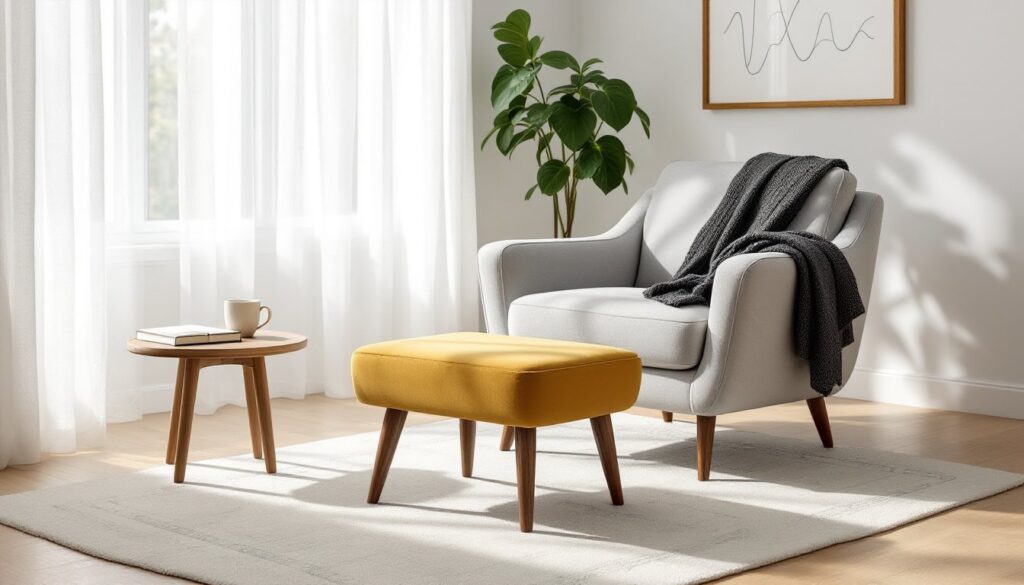
A small footstool might seem like an afterthought, but it’s one of the most versatile pieces in a living room. Whether it’s parked in front of a favorite chair, tucked under a console table, or serving double-duty as extra seating, the right footstool fills gaps that bigger furniture can’t. Unlike full-size ottomans that dominate floor space, small footstools slide into tight corners, move easily between rooms, and adapt to whatever the day throws at them. They’re especially useful in compact living spaces where every square foot counts and multi-functional furniture earns its keep.
Table of Contents
ToggleKey Takeaways
- A small footstool for living room combines multiple functions—foot support, extra seating, side table, and decor accent—making it essential in compact spaces where square footage is limited.
- The ideal footstool height should be 1-2 inches lower than your chair seat (typically 10-16 inches) for proper foot support, while 16-18 inch heights work best when using it as extra seating.
- Upholstered footstools with hardwood frames and mortise-and-tenon joinery offer superior durability compared to budget models with stapled plywood, especially in high-traffic living rooms.
- Natural materials like rattan and woven seagrass work best in coastal or bohemian interiors, while wooden footstools suit traditional and rustic styles; match your choice to existing furniture finishes and design language.
- Beyond foot elevation, small footstools creatively serve as bedside tables, plant stands, boot perches, kids’ furniture, and decorative display pieces without requiring rearrangement of larger furniture.
Why Every Living Room Needs a Small Footstool
A small footstool does more work than its modest footprint suggests. At its most basic, it elevates tired feet after a long day, improving circulation and reducing lower back strain when paired with a properly adjusted chair. But function extends well beyond foot support.
In homes with limited square footage, a 12-18 inch footstool can serve as a side table for a coffee mug or book, a landing pad for folded throws, or even a makeshift tray holder. Because they’re lightweight, typically under 10 pounds, small footstools move wherever they’re needed without requiring two people or furniture sliders.
From a design standpoint, footstools introduce texture, color, or pattern at a scale that doesn’t overwhelm. A velvet-upholstered stool in jewel tones can anchor a neutral seating area, while a natural rattan piece softens modern lines. They’re also forgiving: swapping a footstool is faster and cheaper than replacing a sofa if tastes change.
For families, small footstools offer accessible seating for kids without the formality of a full chair. They’re stable, low to the ground, and easy to wipe clean, a practical choice in high-traffic zones where spills are inevitable.
Types of Small Footstools to Consider
Upholstered Footstools
Upholstered footstools combine comfort with visual softness, making them the go-to choice for traditional and transitional living rooms. The padded top, usually 2-4 inches of high-density foam, provides cushioning, while fabric or leather covers introduce warmth.
Performance fabrics like treated polyester or nylon blends resist stains and moisture, which matters if the stool sees daily use or sits near snack zones. Leather and faux leather wipe clean easily but can crack over time without conditioning. Velvet and chenille add luxury but show wear patterns faster in high-traffic areas.
Frame construction varies. Budget models often use stapled plywood frames, which work fine for light-duty use but can loosen over time. Mid-range and premium footstools feature hardwood frames with corner blocks and mortise-and-tenon joints, the same joinery found in quality case goods. Check the underside: exposed staples and thin fabric backing signal lower durability.
Legs matter, too. Tapered wooden legs in walnut or oak keep the profile light, while turned legs suit farmhouse or vintage aesthetics. Some upholstered footstools skip legs entirely, resting on a solid base for a cleaner, modern silhouette.
Wooden and Natural Material Options
Wooden footstools range from rustic pine benches to sleek mid-century designs in teak or ash. Solid wood construction offers longevity, many vintage footstools from the 1960s are still in daily use, but expect some weight. A solid oak stool measuring 14 x 10 x 12 inches can easily top 8 pounds.
Joinery tells the quality story. Look for mortise-and-tenon or doweled joints rather than butt joints secured with screws alone. If the stool has stretchers (horizontal supports between legs), they should be tight-fitting and free of gaps. Finish options include oil, which enhances grain but requires reapplication every 1-2 years, and polyurethane, which provides a durable, low-maintenance surface.
Rattan, wicker, and woven seagrass footstools bring organic texture without the heft of solid wood. These materials work especially well in coastal or bohemian interiors. Rattan is technically a solid material (a type of climbing palm), while wicker refers to the weaving technique, it can be made from rattan, willow, or synthetic resin. Resin wicker handles humidity better than natural materials, making it a smart pick for sunrooms or homes without climate control.
Natural materials do require some care. Woven surfaces can snag on sharp objects, and prolonged sun exposure can dry out and crack rattan. A light coat of furniture wax every six months helps maintain flexibility and prevents brittleness. For DIY enthusiasts exploring beginner woodworking projects, building a simple wooden footstool is an approachable first build that teaches basic joinery and finishing techniques.
How to Choose the Right Size and Height
Getting the dimensions right ensures comfort and prevents the footstool from looking lost or oversized in the space. Height is the most critical measurement.
For foot support while seated, the stool should sit 1-2 inches lower than the front edge of the chair or sofa seat. Most living room seating has a seat height between 16-20 inches, which means footstools in the 10-16 inch height range cover the majority of use cases. If the stool will serve primarily as extra seating, aim for 16-18 inches, standard dining chair height, so users can sit comfortably with feet flat on the floor.
Width and depth depend on available floor space and how the stool will be used. A 12 x 12 inch footstool fits neatly in front of an accent chair without blocking walkways, while a 16 x 12 inch rectangular stool can accommodate two feet side-by-side or serve as a landing spot for a small tray.
In tight quarters, measure the clear space in front of the chair with a tape measure, then subtract 3-4 inches to ensure the stool doesn’t feel crammed. Remember that feet need to rest on the stool without knees splaying outward, a stool that’s too narrow forces an uncomfortable leg position.
Also consider the overall scale relative to nearby furniture. A delicate footstool with thin tapered legs can look spindly next to a chunky leather recliner, while a hefty wooden stool might overwhelm a midcentury lounge chair with slim arms.
Matching Your Footstool to Your Living Room Style
The footstool should feel like it belongs without duplicating every other finish in the room. Cohesion doesn’t mean identical, it means working within the same design language.
For traditional and transitional spaces, upholstered footstools with button tufting, nailhead trim, or turned legs echo classic furniture forms. Fabrics in damask, linen, or leather align with the formality. Wood tones should coordinate with existing case goods: if side tables are dark walnut, a footstool with espresso-stained legs ties in neatly.
Modern and minimalist interiors benefit from clean-lined footstools with slim profiles and monochromatic palettes. Think low platforms in black leather, molded plywood shells, or powder-coated metal frames. Avoid ornate details like tufting or carved legs, which clash with the aesthetic.
Farmhouse and rustic styles pair well with natural wood footstools showing visible grain, or upholstered pieces in grain sack stripes, ticking, or burlap-look weaves. Distressed finishes and chunky legs reinforce the lived-in feel. IKEA furniture modifications can be a cost-effective route for customizing simple stools with vintage-inspired paint treatments or new legs.
Bohemian and eclectic rooms have the most freedom. Mix materials, a Moroccan leather pouf next to a midcentury chair, or a rattan stool paired with a velvet sofa. Pattern and color can be bold here: it’s one of the few styles where a jewel-toned embroidered footstool feels right at home.
If the footstool introduces a new finish or material, tie it back to the room with at least one other element: throw pillows in a matching hue, a rug with similar texture, or artwork that shares a color note.
Creative Ways to Use a Small Footstool Beyond Resting Your Feet
Small footstools earn their keep by serving multiple roles. Once the initial purpose is covered, they adapt to whatever a household needs.
Extra seating is the most common secondary function. At gatherings, footstools migrate from their usual spots to accommodate overflow guests. A sturdy wooden or upholstered stool with a weight capacity of 200+ pounds handles adults without concern, though it’s worth checking manufacturer specs, some decorative stools max out around 150 pounds.
Bedside tables work when nightstands won’t fit. A small footstool with a flat top holds a lamp, book, and phone charger while taking up minimal floor space. This trick is especially useful in tight bedrooms where a traditional nightstand blocks closet doors or creates pinch points.
Plant stands elevate greenery to eye level, improving light exposure and creating visual interest at varying heights. A 12-inch footstool positions a 6-8 inch planter at a comfortable viewing height without requiring a dedicated stand. Just use a waterproof saucer to protect the stool surface from moisture.
In entryways and mudrooms, a small footstool functions as a perch for pulling on boots or tying shoes. Position it near the door with a basket underneath for gloves or pet leashes. Some DIYers build simple footstools specifically for this purpose, basic step stool plans translate easily into sturdy entry benches with minimal modification.
Kids’ furniture is another natural fit. A low footstool becomes a table for coloring, a seat for tea parties, or a step for reaching sinks. Wooden stools take crayon marks and spills better than upholstered versions in these high-mess applications.
Finally, decorative display shouldn’t be overlooked. A sculptural footstool in an interesting material, carved wood, hammered metal, or colorful ceramic, can stand alone as an accent piece, styled with a stack of design books or a small tray.